Hyaluronic Acid Skincare: The Ultimate Hydration Guide
Hyaluronic acid is everywhere. You see it on serum bottles, moisturizer jars, sheet mask packets, even in some makeup. Everyone has heard the name. It promises dewy, plump, hydrated skin with a single swipe. And for good reason. The molecule can hold up to a thousand times its weight in water. That sounds like a dream ingredient. But here's the catch. Most people misunderstand how it actually works.
The marketing makes it simple. Slather on hyaluronic acid and your skin drinks it up. End of story. The reality is more complicated. The science of molecular weight changes everything. High molecular weight HA sits on top of the skin. It forms a film that holds moisture in. Low molecular weight HA penetrates deeper. It delivers hydration to the deeper layers. But that same ability can backfire. In dry air, low molecular weight HA can pull water from the deeper skin instead of from the environment. The result is the opposite of what you want. Your skin feels tight. It looks dull. It gets drier.
Application technique matters just as much. Hyaluronic acid needs water to work. If you apply it to dry skin with no dampness, it has nothing to grab onto. It can actually draw moisture out. And the environment plays a huge role. Humidity levels, season, indoor heating, all of it affects whether HA plumps or parches. You cannot ignore these factors and expect magic.
This article is not about convincing you to use hyaluronic acid. You probably already do. It is about using it correctly. Because a product used wrong can do more harm than good. Dermatologists agree that HA is a powerhouse when handled properly. But it demands a little respect. It demands understanding.
This guide walks through what hyaluronic acid actually is and why skin loves it so much. Then it gets into the molecular weight debate. After that, the techniques that make or break a routine. And finally, how to adapt application for different climates and skin types. By the end, you will know exactly how to make HA work for you instead of against you.
Now, let's start with the basics. What is hyaluronic acid and why does skin crave it?
What Is Hyaluronic Acid and Why Skin Loves It
Despite its name, hyaluronic acid is nothing like the harsh acids people worry about. No peeling, no stinging, no exfoliation. It is a glycosaminoglycan, a type of sugar molecule that occurs naturally in the skin's connective tissue. It is there all along, holding onto water like a microscopic sponge.
And what a sponge it is. Hyaluronic acid can hold up to 1,000 times its weight in water. Let that sink in for a moment. A single gram of HA can bind roughly a liter of water. That's why dermatologists call it the ultimate humectant.
Here's where most people get confused. Many assume hydration works by adding water directly to the skin's surface, like pouring water on a plant. But skin doesn't absorb water from the outside in that simple way. Hyaluronic acid works differently. It's a humectant, which means it pulls moisture from deeper layers of the skin and from the air into the outer layers. It doesn't add oil or create a barrier. Instead, it attracts and holds water where skin needs it most.
This distinction matters. If you're dealing with tightness, flakiness, or that uncomfortable "pulled" feeling, you might assume your skin is dry. But often the real issue is dehydration, which comes down to water levels rather than oil production. Understanding the difference changes everything. [link: /blog/dry-vs-dehydrated-skin-differences]
The skin's natural hyaluronic acid levels also decline with age, sun exposure, and environmental stress. That's why topical application matters so much. When you apply HA serums or moisturizers, you're supplementing what the skin already knows how to use. [link: /blog/understanding-skin-health]
The beauty of hyaluronic acid is its versatility. It works for every skin type, from oily to sensitive. It plays well with other ingredients. And it delivers results without irritation. But to really understand why HA is non-negotiable, we need to look at the science. How does it actually move water through the skin? What happens at the cellular level? Let's dive into the mechanics of hydration next.
The Science: How HA Actually Hydrates Skin
When you apply hyaluronic acid to your skin, something remarkable happens. It acts like a moisture magnet, pulling water from the surrounding environment and from deeper layers of the skin up into the stratum corneum. That outermost layer becomes plump, bouncy, and visibly hydrated. But not all hyaluronic acid behaves the same way. The size of the molecule changes everything.
High molecular weight HA is a big molecule. Too big to slip past the skin's surface. So it stays right where you put it, forming a breathable film that holds moisture against the skin. This gives you that instant dewy look and helps support the skin barrier. A strong barrier is your first line of defense against irritation and transepidermal water loss. If your barrier feels compromised, you might find value in our guide on how to repair skin barrier 2025.
Low molecular weight HA is smaller. It can wriggle deeper into the epidermis, sometimes even reaching the dermis. Once there, it continues to attract water from within, providing longer term hydration that doesn't rinse off with your next cleanse. Dermatologists agree that this deeper delivery can help improve skin's resilience over time. But there's a catch. Very small HA fragments can sometimes trigger a mild inflammatory response in sensitive skin. That's why balance matters. If your skin tends to react, our article on skin inflammation guide may help you understand the signs.
Research suggests that the ideal approach is to use a blend of weights. A multi weight formulation gives you the best of both worlds. The large molecules sit on top for immediate comfort and barrier support. The smaller ones travel deeper to hydrate from within. Some formulations even include medium weight HA that falls somewhere in between, offering a gradual release of moisture. This layered strategy is gaining traction because it mimics the skin's own natural hyaluronic acid profile more closely.
You don't have to choose between instant plumping and lasting hydration. A good HA serum or moisturizer will deliver both. And as you explore different products, you'll start to see terms like sodium hyaluronate and hydrolyzed HA on the ingredient list. Those are simply different forms of the same molecule, each with its own size and behavior. Understanding those differences is the next step in mastering your hydration routine. Let's look at how each form works and which one might suit your skin best.
Different Forms of HA: Sodium Hyaluronate, Hydrolyzed HA, and More
If ingredient labels feel like a foreign language, you're not alone. Sodium hyaluronate. Hydrolyzed HA. Acetylated HA. They all sound intimidating. But here's the good news: they're all just variations of the same hydration hero. Each one has a different job. And once you understand what they do, you'll actually get excited to see them on a label.
Standard hyaluronic acid is the big one. Its molecules are large. Too large to sink deep into the skin. So it sits on the surface and pulls moisture from the air and the deeper layers of the skin upward. That's what gives you that instant plump, dewy glow. Think of it as a glass of water on a table. It hydrates the top layer beautifully.
Then there's sodium hyaluronate. This is the salt form of HA. Its molecules are smaller. Much smaller. That means it can penetrate further into the skin's upper layers instead of just sitting on top. Dermatologists agree this form is more stable and absorbs more easily. If you see this on an ingredient list, it's a sign the product is designed to deliver hydration below the surface.
Hydrolyzed hyaluronic acid takes things even deeper. It's been broken down into tiny fragments. So tiny they can reach the lower layers of the epidermis. This is where long term hydration happens. It works from within rather than just on top.
And then there's acetylated HA. This modified version clings to skin better and resists being washed away. It stays on longer. It creates a reservoir effect, releasing hydration gradually over time. Perfect for overnight repair.
So why does seeing multiple forms matter? Because skin isn't a single flat surface. It has layers. Each form targets a different layer. The standard HA handles the surface. Sodium hyaluronate works its way into the mid layers. Hydrolyzed HA goes deep. Acetylated HA lingers. A product with all four is essentially covering every level of the skin's hydration needs. That's not marketing fluff. That's smart formulation. It's also why the best HA serums feel like they're working on multiple levels at once.
If you want to geek out on more skincare ingredients, the glossary at /blog/skincare-ingredients-glossary-a-z is a great place to start. And if you're curious about how HA pairs with other multitasking ingredients, niacinamide is a great example. You can read more at /blog/niacinamide-skincare-multitasker.
Now that you know your sodium hyaluronate from your hydrolyzed HA, it's time to talk application. Because how you use these ingredients matters just as much as which one you pick. Let's move on to how to use HA in your routine for maximum results.
How to Use HA in Your Routine for Maximum Results
Now that you know your sodium hyaluronate from your hyaluronic acid, let's talk about how to actually use it. Because here's the thing: HA is a thirsty molecule. It pulls water from the environment and from deeper layers of the skin. But if you apply it to dry skin, it can't find enough moisture to hold onto. Instead, it may start drawing water from the skin's deeper layers, leaving you drier than before. That's why the damp-skin trick matters more than most people realize.
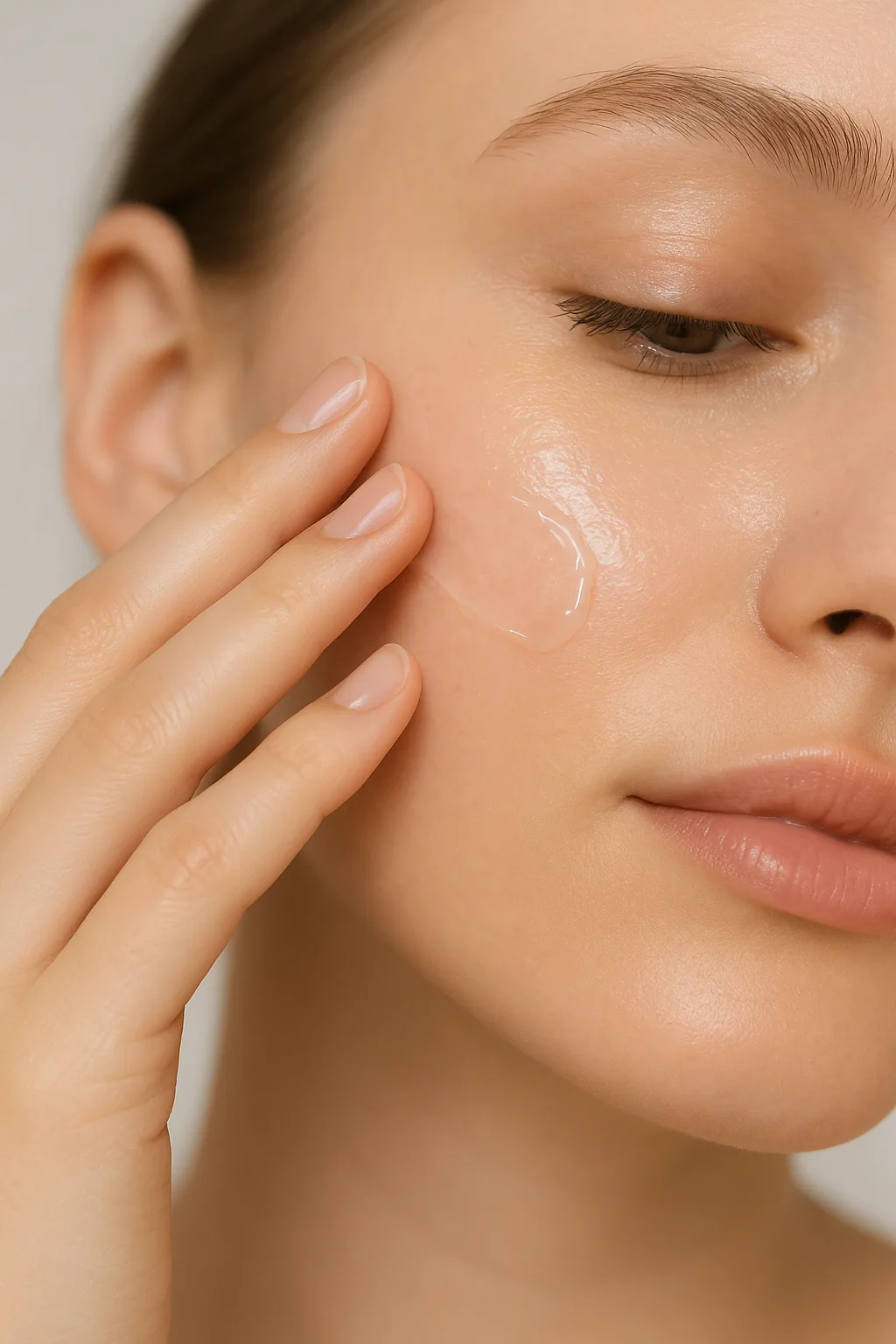
Here's the simple rule: HA goes on damp skin, not dry. After cleansing, don't towel off completely. Leave your face slightly moist. Then apply your HA serum. Gently press it in. That extra water gives the HA something to grab, so it can plump your skin instead of stealing from it. Then follow immediately with a moisturizer. The moisturizer seals everything in and prevents the HA from evaporating. Think of it like a sponge: you wet the sponge, then put a lid on it. Without that lid, the water just floats away.
Morning versus evening? You can use HA both times, but the context matters. In the morning, apply it on damp skin after cleansing, then layer a moisturizer and sunscreen. The HA will keep your skin hydrated throughout the day. At night, it works beautifully as a base layer before richer creams. If you use retinol or exfoliating acids, apply HA first on damp skin, wait a minute, then follow with your active, and finish with a moisturizer. This buffers the active and reduces irritation. For a deeper dive on building the right order, check out our guide on building the perfect skincare routine.
Layering HA with other serums is straightforward. It plays well with almost everything. Niacinamide is a perfect partner: it strengthens the skin barrier while HA hydrates. Ceramides lock in the moisture HA brings. Peptides support collagen production alongside HA's plumping effect. Apply thinner serums first, thicker ones later. HA is usually water-based and goes early. If you're new to layering, our skincare routine for beginners walks through each step.
One more nuance: the skin's needs change around the clock. In the morning, skin is more receptive to hydration because it lost water overnight. In the evening, it focuses on repair. Using HA in both routines is fine, but adjust the thickness of your moisturizer accordingly. Lighter gel in the AM, richer cream at night. This circadian approach helps the skin get the most from each product. Our circadian skincare guide explains why timing matters.
Now, you might be wondering: what if I'm doing everything right and still feel dry? That's where the next section comes in. Let's look at the common HA mistakes that sabotage hydration and how to fix them.
Common HA Mistakes That Sabotage Hydration
Let's talk about the mistakes that turn hyaluronic acid from a hydration hero into a sneaky source of dryness. The first one? Applying it to a dry face. HA is a humectant, which means it pulls water toward itself. If your skin isn't damp, it pulls moisture from the skin's deeper layers instead of the air. That leaves you drier than when you started. Always spritz a little water or pat your skin lightly before applying HA. Damp skin gives it something to grab onto.
Next up: using HA in arid climates without a finishing layer. Here's the science. When the air is bone dry, there's no environmental water for the HA to attract. So it draws from the skin and then that moisture evaporates into the air. The result? Tighter, flakier skin. If you live in a dry climate or spend time in air-conditioned or heated rooms, follow HA with a creamy moisturizer or a facial oil. That occlusive layer locks the hydration in. Your seasonal routine might need a switch-up too, and this guide to seasonal skincare can help you adjust.
Then there's the urge to layer five different HA serums at once. More isn't better. The skin has a finite capacity to hold water. Piling on multiple HA products just leaves a tacky, pilled mess on your face. It can also overwhelm the barrier over time. Pick one well-formulated HA product and stick with it. Simplicity wins, and the skinimalism trend is built on exactly that idea.
Here's another big one: expecting HA to replace your moisturizer. It can't. HA is a humectant, not an occlusive. It brings water to the surface, but it doesn't seal it in. Without a moisturizer on top, that water is free to escape. Think of HA as a pitcher carrying water to the skin. The moisturizer is the lid. You need both.
Finally, the misconception that HA alone fixes dehydrated skin. Dehydrated skin is a barrier issue, not just a water issue. If the barrier is compromised, HA can't do its job properly. You need ceramides, fatty acids, and soothing ingredients to rebuild that protective layer. Many people make these same skin barrier repair mistakes without realizing it. And if your skin still feels tight and uncomfortable no matter what you do, HA might not be the missing piece. That's when you need to look deeper. Let's explore who benefits most from HA and when it's not enough.
Who Benefits Most from HA and When It's Not Enough
Let's be clear: hyaluronic acid is one of the few ingredients that genuinely works for every skin type. Dry skin drinks it up like a tall glass of water on a hot day. Oily skin? HA is lightweight and non-comedogenic, so it hydrates without clogging pores or adding shine. Sensitive and reactive skin types often tolerate it beautifully because HA is naturally found in the body. And for aging skin, HA helps plump fine lines and restore that bouncy, dewy look. It's a universal player.
But the real magic shows up in specific scenarios. After a chemical peel or microneedling session, the skin barrier is temporarily vulnerable. HA delivers instant, calming hydration without irritation. The same goes for skin that's been stripped raw by over-exfoliation. You know that tight, waxy feeling? HA can help soothe it, but only if the barrier isn't completely wrecked. If you see fine dehydration lines across your forehead or around your eyes, those often disappear with consistent HA use. It's also a key ingredient for barrier repair because water movement is essential for healing. A properly hydrated barrier can start rebuilding those lipid layers.
Now here's the honest truth. HA is not a cure-all. It pulls water into the skin, but it can't create water out of thin air. In very dry climates or heated indoor environments, HA can actually draw moisture from deeper layers and leave you feeling tighter. That's frustrating. If you live in a low humidity area or blast the AC all day, you need a humidifier or an occlusive layer on top. Think heavier creams with shea butter or squalane.
For severely compromised barriers, HA alone will fall short. If your skin burns, stings, or feels papery thin, it's crying out for lipids, not just water. Ceramides, fatty acids, and cholesterol are the actual building blocks of the barrier structure. Ingredients like beta glucan also step in as a gentler alternative that doesn't rely on humidity to work. That's when you want to explore a targeted approach like skin cycling or a dedicated barrier repair routine.
When you need more than water, look to other humectants and emollients. The skin is a complex ecosystem. Sometimes it needs a drink. Sometimes it needs a meal. Knowing the difference is what separates good skin from great skin. And that brings us to the next topic: comparing HA to other hydrating ingredients so you can build a routine that truly delivers.
HA vs Other Hydrating Ingredients: How They Compare
Hyaluronic acid gets all the glory. It's the celebrity of the skincare world. But here's the truth your skin needs to hear: HA isn't always the hero. Especially if you live in a dry climate or a heated apartment in winter. When humidity drops below 40%, hyaluronic acid can actually draw moisture out of your skin into the air. That's the opposite of what you want.
Enter glycerin. This humble workhorse doesn't care about humidity. It pulls water into your skin reliably, rain or shine. Dermatologists agree it's one of the most effective humectants available. It's also cheaper, gentler, and works beautifully in almost any formula. If your skin feels tight after applying your HA serum, try a glycerin-based product instead.
Then there's beta-glucan. This ingredient comes from oats or mushrooms. It feels softer on the skin than HA. Less sticky. More cushiony. Research suggests it's particularly good for sensitive or reactive skin because it calms inflammation while hydrating. If HA makes your skin tingle or flush, beta-glucan might be your match.
Squalane plays a different game entirely. It's an oil. It doesn't pull water into the skin. Instead, it reinforces the skin barrier so moisture stays put. Think of it as the sealant after your drink of water. This is where the concept of skin longevity comes into play. A strong barrier protects against environmental stress and keeps skin resilient over time. That's why squalane is a favorite in routines focused on skin longevity.
Panthenol is the multitasker. Also known as provitamin B5, it hydrates and soothes at the same time. It's especially helpful after exfoliation or in any routine where the barrier needs extra support. For a deeper look at how these ingredients work with the skin's natural defenses, check out our guide on skin barrier intelligence.
So when should you choose each? Use HA in humid weather or layered under a moisturizer. Reach for glycerin when the air is dry. Pick beta-glucan if your skin is easily irritated. Add squalane when you need barrier repair. Use panthenol after treatments or when you want calming hydration.
The best hydration strategy rarely relies on one ingredient alone. Your skin is smarter than that. It thrives on variety. A well-formulated routine might combine HA in the morning with glycerin and squalane at night. Or layer beta-glucan under a panthenol-rich cream. The goal is synergy. Give your skin multiple ways to hold onto water.
The bottom line: don't fall for the HA hype. Build a hydration team. Your skin will thank you.
The Bottom Line
Here is another truth. Hyaluronic acid is one player on a larger team. It cannot replace a good moisturizer, a gentle cleanser, or a balanced routine that supports the skin barrier. It works best when it is part of a broader hydration strategy. Think of it as a glass of water for your skin, not a full meal. You still need the rest of your routine to keep things calm, smooth, and resilient. And what works in July might not work in January. Pay attention. Skin changes with the seasons, with stress levels, with hormones. The same HA serum that feels amazing in a humid summer can feel like a desert in a heated office in February. That is not a failure. That is information.
So take a step back and observe. How does your skin feel an hour after applying HA? Does it feel dewy and comfortable, or tight and parched? Adjust your technique accordingly. Maybe you need to apply it to wetter skin. Maybe you need a heavier moisturizer on top. Maybe you need to skip it on very dry days and use a different hydrating ingredient instead. This is where tuning in matters. And if you want to track how your skin responds over time, an AI skin analysis can offer an objective second look. It can help you notice shifts you might otherwise miss.
The bottom line is simple: hyaluronic acid is a fantastic ingredient, but it is not a miracle. You are the one making the magic happen, one informed choice at a time.
Drafted using Lumino AI.
This content is for informational purposes only and is not medical advice.
Learn how we review skincare guidance in our methodology.
Last updated: October 8, 2026
Written by
Lumino AI