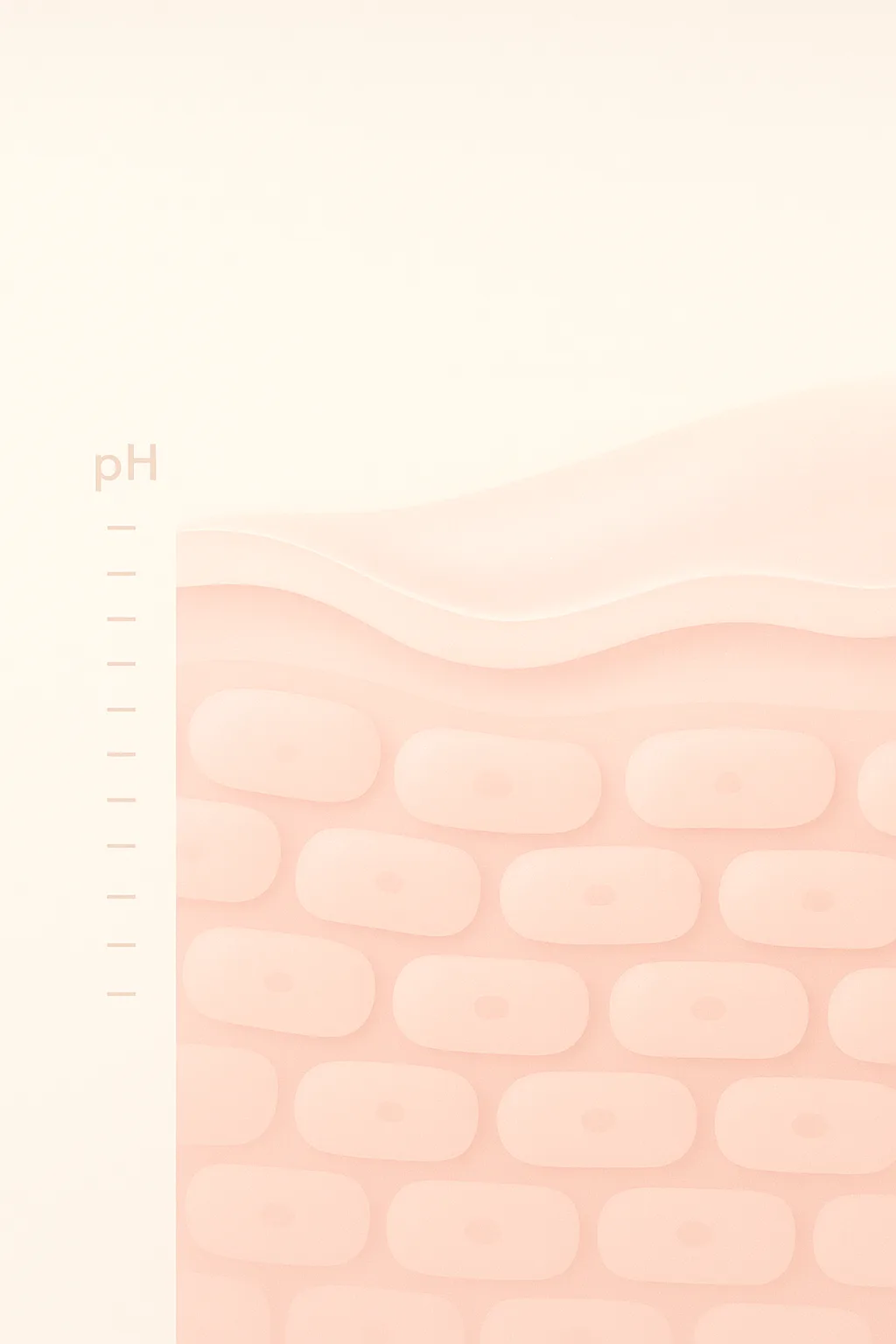
Skin pH and the Acid Mantle: Your Protective Barrier Explained
That "squeaky clean" feeling after washing the face? It is one of the most misunderstood moments in skincare. That tight, parched sensation signals a problem, not success. The brain might register a deep cleanse, but the skin is telling a different story.
That stripped feeling means the skin's pH has bounced into alkaline territory. The acid mantle, that thin protective film on the skin's surface, depends on a slightly acidic environment to stay healthy. When harsh formulas push it out of balance, the barrier takes a hit. A compromised barrier leads to moisture loss, increased sensitivity, and a microbiome left vulnerable to irritation.
Understanding skin pH is foundational. It is not flashy or trendy, so it often gets overlooked in favor of active ingredients and fancy tools. Yet this simple measure of acidity or alkalinity influences everything: barrier integrity, oil production, how well a moisturizer absorbs, even how the complexion looks by mid-afternoon. Getting pH right does not require a chemistry degree. It starts with being mindful about what is used to wash the face. That seemingly innocent daily cleanse can either fortify the acid mantle or dismantle it piece by piece.
If there is one thing to focus on in a routine, it should be the skin's pH balance. This guide will demystify what the acid mantle actually is and how it works, all while explaining why keeping it happy makes every other product perform better. The best feeling in skincare moves past squeaky into something far better: calm, comfortable, and resilient. That is what a true healthy glow feels like.
What Is Skin pH and the Acid Mantle?
A quick science moment: pH stands for "potential of hydrogen." It is a scale from 0 to 14 that measures how acidic or alkaline something is. A pH of 7 is neutral. Below that is acidic, above is alkaline. The skin sits comfortably on the acidic side, usually around 4.5 to 5.5. That is by design, not accident.
That slight acidity comes from something called the acid mantle. Think of it as a thin, invisible film living on the surface of the skin. It is made of a mix of sebum, sweat, and natural moisturizing factors. Together, they create a delicate shield that works around the clock. This mantle is the skin's first line of defense. It keeps the bad stuff out and the good stuff in.
Here is why the acid mantle matters so much. The skin is covered in millions of tiny microorganisms, some friendly, some not so much. The acidic environment keeps harmful bacteria from thriving. It also helps maintain the skin's moisture balance. When pH stays in that happy 4.5 to 5.5 zone, the skin can hold onto water and stay plump. When it tips too alkaline, the acid mantle weakens. Moisture escapes, irritants sneak in, and the skin feels tight, dry, or reactive.
A balanced acid mantle is essential for overall skin health. It supports the skin's natural repair process, calms inflammation, fends off environmental aggressors, and keeps the complexion looking smooth and even. It can be thought of as a bouncer for the face, checking IDs and turning away trouble.
So what happens when that delicate balance gets thrown off? Let's look at why pH matters for the skin barrier.
Why pH Matters for the Skin Barrier
The skin's surface is not just a passive layer. It is a finely tuned biochemical factory. The pH of that environment acts like a master switch for the enzymes that build and maintain the protective barrier. Think of it as the conductor of an orchestra. When the pH is right, every instrument plays in harmony.
Inside the stratum corneum, a class of enzymes called lipid-processing enzymes depend on a slightly acidic pH to function. These enzymes take raw materials and transform them into ceramides, cholesterol, and fatty acids, the three essential components of the lipid matrix that glues skin cells together. Ceramides are especially crucial. They fill the spaces between skin cells, creating a waterproof seal that keeps moisture in and irritants out. When pH rises above 5.5, those enzymes start to slow down or misfire. Fewer ceramides are produced. The lipid matrix becomes porous. And the barrier begins to weaken.
That is where trouble starts. A compromised barrier means water escapes more easily, leading to increased transepidermal water loss. The skin feels tight, looks dull, and may develop flaky patches. At the same time, microscopic gaps in the barrier allow environmental aggressors, from pollution to bacteria to allergens, to slip through. This triggers inflammation. Redness, stinging, and heightened sensitivity follow. Many common barrier concerns, from chronic dryness to reactive redness to conditions like eczema, trace back to a disrupted pH balance.
Even small shifts in pH can set off this cascade. Harsh cleansers, alkaline soaps, over-exfoliation, and even hard tap water can push the skin's pH upward. The result is a barrier that is constantly trying to repair itself but never quite catching up. If persistent sensitivity or dehydration is a struggle, pH might be the hidden culprit. Fortunately, the barrier can be restored. Understanding how to repair the skin barrier starts with rebalancing that pH. And because ceramides are the backbone of a healthy lipid matrix, incorporating them into a routine is a powerful step.
But pH does not work alone. It also influences the delicate ecosystem living on the skin's surface.
The pH-Microbiome Connection
Think of the skin as a garden. The acid mantle is the soil, and the microbiome is everything that grows in it. When the soil is healthy, beneficial plants thrive and weeds stay away. When the soil turns hostile, the weeds take over. The skin works the same way.
The acid mantle sits at a pH of around 4.5 to 5.5. That mild acidity is no accident. It creates a selective environment. Beneficial bacteria like Cutibacterium and Staphylococcus epidermidis are right at home there. They produce antimicrobial peptides and outcompete pathogens for space and food. They are the skin's first line of defense.
When the skin shifts alkaline, the rules change. Opportunistic microbes that normally cannot gain a foothold suddenly find the door open. Staphylococcus aureus flourishes at a higher pH and is strongly associated with acne, eczema flare-ups, and skin infections. Fungal overgrowth also loves an alkaline environment, which is why conditions like seborrheic dermatitis and stubborn fungal acne often appear when the acid mantle is compromised.
pH balance is not just about preventing dryness or irritation. It is about protecting an entire ecosystem. A balanced pH keeps the microbiome diverse, resilient, and capable of defending itself. It supports the skin barrier and keeps inflammation in check. Maintaining that delicate acidic balance is one of the most important things to do for long-term skin health.
So what actually pushes the skin's pH out of whack? Harsh cleansers play a big role, but they are not alone. Tap water, toner, even stress levels all contribute.
What Throws Skin pH Off Balance
The most obvious offender is the cleanser. Many foaming washes and classic bar soaps clock in at a pH between 8 and 10. That is a full two to four points above the skin's natural 5.5. Using them strips away the protective acid mantle and leaves the barrier vulnerable. That tight, squeaky-clean sensation afterward is not clean skin. It is damage.
Then there is tap water. Hard water is loaded with alkaline minerals like calcium and magnesium. Every rinse leaves a residue that slowly raises the skin's pH. Over time, this can weaken the barrier and trigger dryness or irritation. If the skin feels tight after washing even with a gentle cleanser, the water might be the culprit.
Exfoliation is another common trap. AHAs and BHAs are fantastic for smoothing texture and clearing pores. But they work by dissolving the bonds between dead skin cells, which temporarily lowers the skin's pH. If a properly pH-balanced toner or moisturizer is not used afterward, the skin can become stuck in an acidic state. This leads to redness, stinging, and a compromised barrier. Over-exfoliation is one of the fastest ways to undo hard work.
The skin also changes with age. As people get older, the acid mantle naturally becomes less efficient. The pH creeps upward. This makes mature skin more prone to dryness, sensitivity, and infection. It is biology, which means being more intentional about what is put on the face.
Finally, the environment should not be underestimated. Pollution particles land on the skin and trigger oxidative stress, shifting pH and inflaming the barrier. UV exposure does the same thing. Sunlight breaks down the lipids that hold the acid mantle together, weakening the defense system and letting moisture escape.
Signs Skin pH Is Off
That tight, squeaky-clean feeling right after washing the face? That is the acid mantle waving a white flag. When the skin's pH tips too alkaline, it strips away protective lipids. The result is instant tightness, not cleanliness.
Then there is the sting. Maybe it happens when a serum or moisturizer is applied. A little burn, a prickle on the cheeks or around the nose. That is inflammation knocking. The barrier has become porous, so ingredients that would normally sit politely on the surface now irritate deeper layers. Healthy skin should not sting.
Breakouts are another giveaway. Not the usual spots expected around the chin or T-zone, but random clusters on the cheeks or jawline, places that never usually erupt. When pH drifts too alkaline, the skin's natural microflora gets disrupted. Bad bacteria flourish. Good bacteria suffer. Pimples appear in unexpected locations.
A dull complexion or unnaturally shiny skin also points to the same problem. Dullness means dead cells are not shedding properly because enzymatic exfoliation, which relies on a slightly acidic pH, has stalled. Shininess means the skin is overproducing oil to compensate for a stripped barrier. Neither looks healthy.
These signs are the skin's language. Tightness, stinging, random breakouts, dullness or oiliness. Learning to listen is key. Once something is off, it can be fixed.
How to Restore and Maintain Healthy Skin pH
The good news is that a chemistry degree is not needed to fix this. Restoring the skin's pH is simpler than expected, and it often works faster than any fancy serum.
Start with the cleanser. Most foaming gels and bar soaps are far too alkaline. Switch to a gentle, pH-balanced cleanser formulated around 5.5. That small number makes a huge difference. The skin will feel clean, not tight or squeaky. No more of that "just washed" dryness. Look for a cleanser that lists its pH on the bottle or comes from a brand that openly tests for it.
Next, think about what happens after rinsing. Even a pH-balanced cleanser can temporarily raise the skin's surface pH. That is where a pH-adjusting toner or essence comes in. These lightweight liquids help bring the skin back to its happy zone. Many modern milky toners do exactly this. They are gentle, soothing, and perfect for reactive skin.
Now, a few habits to break. Over-cleansing is a common culprit. Washing the face more than twice a day is too much. Hot water feels nice but is a disaster for the barrier. Stick to lukewarm water and pat the face dry instead of rubbing. Small changes, big payoff.
Finally, support the barrier with ingredients that love it back. Niacinamide helps regulate oil production, calms inflammation, and supports a healthy pH. Ceramides rebuild the lipid layer that holds moisture in. Beta-glucan is a hydrating powerhouse that soothes irritation without clogging pores. Together, these ingredients create a fortress for the skin.
Restoring pH is often the first step in calming reactive skin. Redness, stinging, breakouts all start to settle once the acid mantle is back in balance. From there, the skin can actually absorb the good stuff applied.
But not all skin is the same. What works for an oily complexion might be too much for dry or sensitive skin.
pH Considerations for Different Skin Types
Think of the skin's pH as a personality trait. It shifts with age, weather, and the products used. Some types are more resilient than others.
Oily skin tends to sit at a naturally lower pH. That is a good thing. A slightly acidic environment helps keep harmful bacteria in check. But over-cleansing can strip away those protective oils. When that happens, the skin panics and produces even more oil to compensate. The result is a disrupted acid mantle and a greasy, irritated mess. The fix is not to stop washing the face. It is to choose a gentle cleanser that respects the skin's natural state. If there is uncertainty about where the skin falls on the spectrum, a guide to skin types can help understand the baseline.
Dry and sensitive skin needs extra care. Dry skin already lacks the lipids that keep moisture locked in, making it far more vulnerable to pH shifts. A cleanser that is too alkaline can leave it feeling tight, flaky, and angry. Sensitive skin reacts even faster. Redness, stinging, and that uncomfortable tight feeling are red flags. Look for products labeled "pH balanced" or "low pH." They clean without stripping, so the skin can hold onto the moisture it desperately needs.
Acne-prone skin also has a lot to gain from pH balance. The bacteria behind breakouts, Cutibacterium acnes, thrives in less acidic environments. When the skin's pH creeps upward, it becomes easier for this bacteria to multiply. Maintaining a slightly acidic pH is key for managing acne. But resist the urge to use harsh, high-foam cleansers. They might feel effective in the moment, but they often backfire. A gentle, pH-aware cleanser can help keep breakouts in check without stripping the barrier.
Mature skin tells yet another story. As people age, the skin's natural pH rises, moving closer to neutral. This shift weakens the acid mantle and makes the skin more alkaline. The natural enzymes that help shed dead skin cells slow down. The result is dull, rough, and more fragile skin. The answer is not to fight the clock with harsh acids. It is to switch to gentler, more nourishing formulas. Creamy cleansers, rich moisturizers, and ingredients that support the skin barrier help compensate for what time takes away.
The skin's pH is deeply tied to its type, and respecting that relationship is half the battle. Once the skin's needs are figured out, it is time to build a routine that works with pH.
Building a pH-Friendly Skincare Routine
Building a skincare routine can feel like navigating a minefield, but understanding pH makes everything click into place. A pH-friendly routine does not have to be complicated. It just needs to be intentional.
Start with the cleanser. This is the product with the most power to disrupt the skin's pH. A gentle, low-foaming cleanser with a pH between 4.5 and 5.5 is a best friend. It cleanses without stripping, leaving the skin feeling soft, not tight. If the face feels squeaky clean after washing, that is a red flag.
After cleansing, a toner can work wonders to rebalance the skin. Look for hydrating toners with ingredients like glycerin, panthenol, or hyaluronic acid. These help pull moisture back in while nudging pH to its happy place. If the water is hard, a pH-adjusting toner becomes even more essential.
Here is a simple template to follow. In the morning: cleanse, tone, apply a vitamin C serum if desired, moisturize, and finish with sunscreen. In the evening: cleanse, tone, apply any treatment serums, then seal with a richer moisturizer or a barrier-repair balm. The key is layering thin to thick, always letting each product absorb before moving to the next.
When choosing products, avoid anything with high concentrations of alcohol, strong fragrances, or harsh sulfates. These strip the acid mantle and throw pH off course. Be careful with over-exfoliating. Twice a week is plenty for most skin types. And stick to lukewarm water when washing the face.
This approach works for every skin type. Oily skin needs its pH respected just as much as dry or sensitive skin. Once a routine is built that works with the skin instead of against it, the barrier will thank you.
The Bottom Line
The skin's acid mantle is the unsung hero of the complexion. It is the thin, acidic film that keeps the barrier strong, the microbiome balanced, and the skin looking calm and healthy. Protecting it starts with one simple shift: respecting the skin's pH.
Choose gentle, pH-balanced cleansers. Avoid harsh sulfates and alkaline formulas. Use lukewarm water. Support the barrier with ingredients like niacinamide, ceramides, and beta-glucan. These small choices add up to big results over time.
When pH is balanced, the skin can do what it does best: protect, repair, and glow. That is the foundation every good routine needs. Everything else builds on top of it.
Drafted using Lumino AI.
This content is for informational purposes only and is not medical advice.
Learn how we review skincare guidance in our methodology.
Last updated: October 8, 2026
Written by
Lumino AI