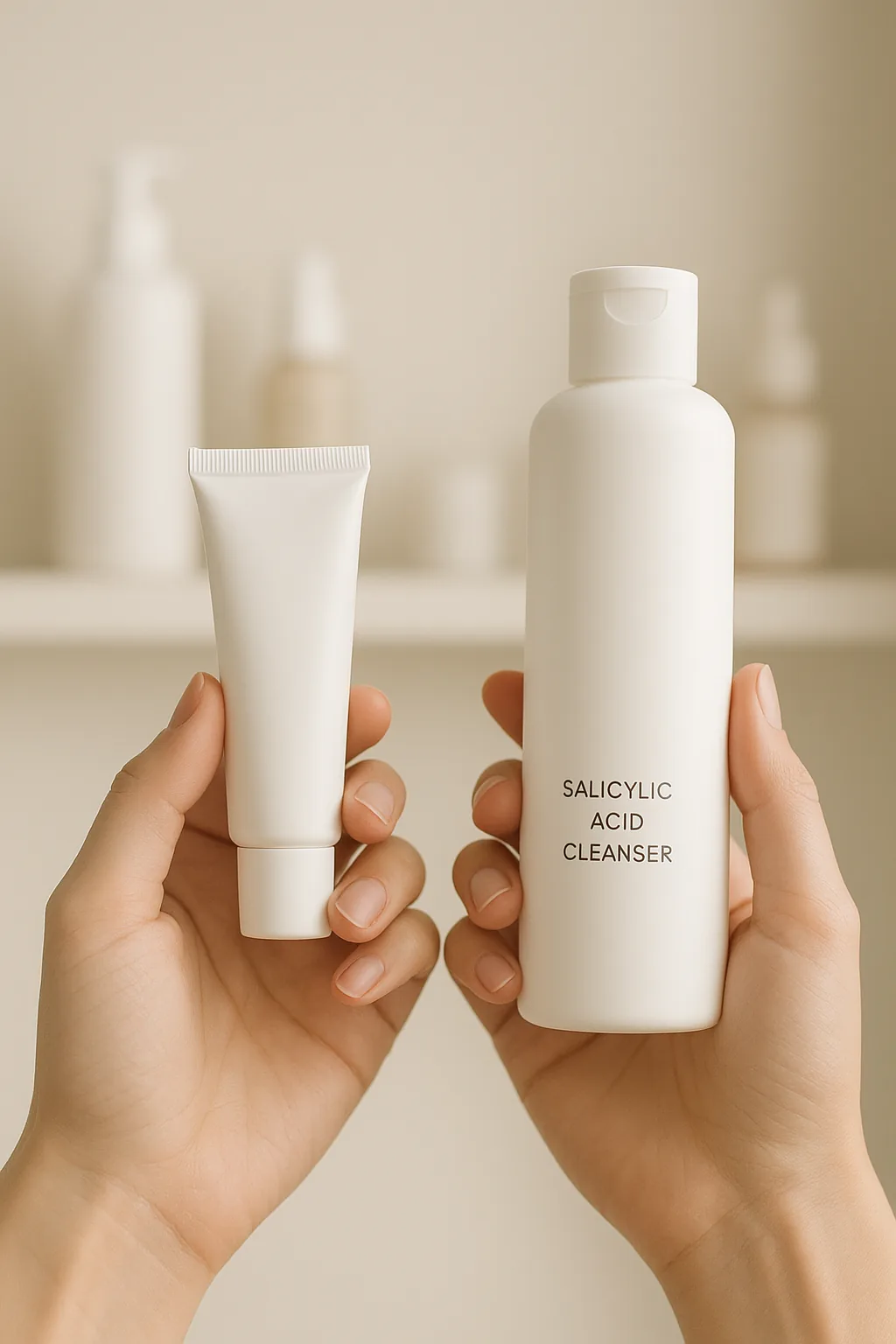
OTC vs Prescription Acne: Cost, Side Effects, and Timelines
Choosing between an over-the-counter acne wash and a prescription retinoid is rarely just about which one works better. You might think the strongest option wins, but real life doesn’t work that way. The decision comes down to three practical factors: what you can afford, what your skin can tolerate, and how long you are willing to wait for results. These three pillars separate a treatment plan you actually stick with from one you abandon after a month.
Acne is frustrating enough without adding confusion about which product to grab. You walk into a drugstore and see shelves of cleansers, serums, and spot treatments. Each one promises clear skin. Then your dermatologist hands you a prescription for a retinoid that costs more and comes with a warning about peeling and redness. Which path do you choose?
The answer isn’t simple. Over-the-counter options are accessible and affordable. You can buy a salicylic acid wash for under fifteen dollars. You can try it tonight. No appointment needed. But they work slowly and only target surface-level breakouts. Prescription retinoids tackle acne at the cellular level, preventing new pimples before they form. They are powerful. They are also expensive, often require a copay, and demand patience through an initial purge that can last weeks.
Cost matters. A thirty-dollar bottle of benzoyl peroxide might last two months. A tube of tretinoin could run you fifty dollars or more with insurance. Without insurance, the price jumps higher. Affordability isn’t just the sticker price. It’s about whether you can keep buying it month after month.
Tolerance matters even more. Your skin might love a gentle salicylic acid cleanser. Or it might rebel against any active ingredient. Prescription retinoids are notorious for dryness, flaking, and irritation. Some people adjust within weeks. Others never do. If your skin can’t handle the side effects, the strongest medication is useless.
Timelines are the third piece. Over-the-counter washes can show mild improvement in a few weeks. Real clarity often takes months. Prescription retinoids can deliver faster results once your skin adjusts, but the first month might look worse. That waiting game tests your patience.
Understanding these three pillars is the difference between a plan that works and one that collects dust on your bathroom counter. Next, the article breaks each one down so you can decide which route fits your life, your skin, and your budget.
The Three Pillars of the OTC vs Prescription Decision
The path to clear skin is rarely a straight line. While clinical studies can tell us which ingredients are most effective, the real world works a little differently. Beyond the science, three practical factors determine which path you should take. These are the pillars of the decision. The best treatment is not the most powerful one on paper. It’s the one you can afford, tolerate, and stick with long enough to actually see results.
First, there is cost. Prescription options often come with a higher upfront price tag, which can be a hurdle even with insurance. Over-the-counter products are more accessible, but the cost can sneak up on you through trial and error. Think about it: buying three different cleansers and serums hoping one works can add up quickly. Consider the total investment of your approach, not just the price of one tube. It is worth weighing the price of a prescription copay against the cost of a cabinet full of products that missed the mark.
Next is side effect tolerance. This is deeply personal. Some people can handle a strong active ingredient without blinking. Others experience redness, flaking, or irritation that makes them want to quit. Prescription strengths often bring a higher risk of these adjustments. OTC products allow for more control, letting you ease into an ingredient at a lower percentage. If you have sensitive skin, that gradual build-up can be the difference between a consistent routine and one you abandon after a week.
Finally, there is the timeline. Acne is stubborn. It does not respond overnight. OTC products can take eight to twelve weeks to show meaningful improvements. Prescriptions can work faster, but they still require patience. Success depends entirely on consistency. As outlined in the guide on how to get rid of acne, the foundation of any routine is simply showing up every day. A slower but sustainable pace will always beat a faster approach you quit early.
The path that wins is the one you can sustain. The most elegant routine in the world is useless if it sits untouched on the shelf. This article is not just looking at clinical efficacy. It is looking at human behavior. When the choice is practical, you are more likely to stay the course and give the treatment time to work. This article serves as a practical companion to the clinical guides you might have read elsewhere.
Now, look closer at the first pillar and break down what the investment truly looks like.
The True Cost of OTC vs Prescription Acne Care
Consider the dollars and sense. When you are dealing with breakouts, the price of a promising new cleanser feels like a small bet. Ten dollars here. Twenty there. It adds up faster than expected. The true cost of OTC acne care includes the price of the products you buy and the quiet expense of the ones that failed. A basic routine with a gentle cleanser, a treatment, a moisturizer, and sunscreen runs ten to fifty dollars a month. That sounds reasonable. Most people do not stick to a single routine, though. They buy a cleanser that dries them out. They switch treatments. They buy a new moisturizer to fix the damage. This trial and error phase is expensive. If you are building a routine from scratch, understanding the fundamentals can help you avoid buying products that do not serve your skin type.
Prescription care demands a higher upfront commitment. A dermatologist copay can be forty to a hundred dollars. The medication itself, even with insurance, might cost another thirty to a hundred dollars a month. Topical retinoids, antibiotics, or spironolactone fall into this category. This easily totals fifty to two hundred dollars a month or more. It feels like a lot to spend before seeing results. The formula is targeted. The dosage is controlled. You are not guessing.
Isotretinoin represents the highest level of investment. Monthly appointments, blood work, and the medication create a significant cost over several months. Dermatologists agree it is one of the most effective options for severe acne. For many, the total investment is worth the chance to stop cycling through products entirely. The long-term cost efficiency of prescription care often reveals itself here. Spending years chasing results with over-the-counter products can easily exceed the cost of a focused medical treatment plan.
No single path is objectively right for everyone. The best choice depends on your skin, your budget, and your goals. Understanding the full financial picture helps you make a smarter decision. Building the perfect routine for your specific needs is a process, whether you go OTC or prescription.
Cost is one pillar of the decision. The way your skin actually reacts to these treatments is a completely different conversation. Shift focus to the side effects.
Side Effect Profiles: OTC vs Prescription Head-to-Head
Every treatment has a price, and it’s not just financial. Your skin will have opinions. The trick is knowing which side effects are tolerable and which signal trouble.
Over-the-counter options come with a fairly predictable set of gripes. Benzoyl peroxide, for instance, is a workhorse against bacteria, but it’s also notorious for bleaching your favorite pillowcases and towels. You’ll learn to love white bedding fast. The same ingredient can cause dryness, mild peeling, and a stinging sensation on application. Salicylic acid and adapalene, an OTC retinoid, can trigger what's called “purging.” That temporary wave of breakouts looks alarming but usually means the treatment is accelerating cell turnover. This phase typically passes within four to six weeks. The key is to start slow, apply a lightweight moisturizer immediately after cleansing, and never skip a rich barrier cream at night. Your skin barrier is your shield. Treat it like one.
Prescription treatments raise the stakes. Retinoids like tretinoin deliver intense dryness, redness, and significant photosensitivity. You will burn faster in the sun. Sunscreen isn’t optional here; it’s mandatory. Oral antibiotics, meanwhile, are effective for inflammatory acne but can disrupt your gut microbiome, leading to stomach cramps, nausea, or yeast infections. A daily probiotic and plenty of water help offset these issues. Spironolactone, a hormone-modulating option for women, often causes breast tenderness, irregular periods, and fatigue. It’s manageable but requires patience during the adjustment period. And then there is isotretinoin, commonly called Accutane. This medication carries a serious side effect burden: severe dryness of skin, lips, and eyes, joint pain, potential mood changes, and a strict requirement for monthly blood tests and pregnancy prevention.
For every category, protection is nonnegotiable. Building a solid routine around barrier repair is the single best way to reduce discomfort. A good moisturizer with ceramides and niacinamide works wonders. Avoid common mistakes like over-cleansing or layering too many actives at once. Learn more about protecting your barrier in the guide on how to repair your skin barrier in 2025 and the common mistakes people make with skin barrier repair.
Managing side effects is about strategy, not suffering. Once you stabilize your routine, the next logical question becomes: when will you actually see results? Realistic timelines are the next topic.
Realistic Timelines: How Long Before You See Results
Patience is the real test in acne treatment. Most people expect a cream or pill to work like a light switch. It doesn’t. It works more like a slow sunrise. And that’s okay, as long as you know what to expect.
The first hurdle is often the purge. When you start a new active ingredient, skin can push out clogs faster than before. That looks like a breakout, and it’s easy to panic. But it’s actually a sign the treatment is working. If you want to know the difference between purging and a true breakout, this guide on skin purging versus breaking out walks through the clues. Purging usually settles within four to six weeks. Then the real progress begins.
For over-the-counter adapalene, expect initial improvement at eight to twelve weeks. That’s not full clearing. That’s the first noticeable shift in texture and breakouts. Significant clearing takes three to six months. Prescription tretinoin is a bit faster on the calendar but still requires patience. Most dermatologists say twelve to sixteen weeks for the full effect. That means the skin barrier has turned over several times, and the retinoid has done its deep work.
Oral antibiotics work quicker, often showing improvement in four to eight weeks. But they’re a short-term tool. Using them long term isn’t recommended due to antibiotic resistance. Spironolactone, for hormonal acne, takes three to six months to really shine. And isotretinoin, the big one, is a four to six month course. That’s not a quick fix either. It’s a structured journey.
So how do you know if a treatment is failing versus just taking its time? Look for a trend. If you’re at the end of the expected window and there’s zero change, that’s a signal to revisit the plan. If you’re seeing steady, even slow, improvement, keep going. Side effects that don’t settle after a few weeks also matter. That’s when a routine adjustment helps. A skin cycling approach, where you rotate actives strategically, can keep irritation down while still making progress. It’s a smart way to stay consistent without wrecking your skin barrier.
Timelines aren’t just about waiting. They’re about matching expectations to reality. And that brings up the next question: how do you know which treatment fits your acne in the first place? Moving on to matching treatment to acne type and severity.
Matching Treatment to Acne Type and Severity
A simple truth: not every pimple needs a prescription. In fact, many breakouts respond beautifully to over-the-counter options if you choose wisely. The key is matching your treatment to what’s actually happening on your skin. Use a heavy retinoid for a few blackheads and you’ll risk irritation. Use a gentle cleanser for deep cystic bumps and you’ll wait forever for results. Getting it right saves time, money, and frustration.
So how do you decide? Look at three things: breakout type, location, and intensity.
Comedonal acne — those clogged pores that show up as blackheads and whiteheads — is often the mildest form. It tends to settle on the nose, chin, and forehead. For this, OTC treatments shine. Salicylic acid exfoliates inside the pore. Niacinamide helps regulate oil production. A consistent routine with these ingredients can clear comedones in a few weeks. Location matters too. If you notice a pattern of breakouts along the jawline or cheeks, it might be worth checking your face mapping habits; the guide on modern face mapping dives into how different zones can signal different triggers.
Mild inflammatory acne — a few red papules or small pustules that come and go — also responds well to OTC products. Benzoyl peroxide kills bacteria and reduces inflammation. Adapalene, available over the counter at lower strengths, speeds up cell turnover. The goal here is gentle consistency. Overdoing it with harsh scrubs or multiple actives can inflame the skin further. Less is often more.
Moderate papular and pustular acne is where things get trickier. You’re seeing several inflamed bumps that linger and sometimes scar. OTC treatments may help but often fall short. This is the point where a prescription retinoid like tretinoin or a topical antibiotic can make a real difference. A dermatologist can also rule out lookalikes. For example, what seems like stubborn acne could actually be fungal. If your breakouts are itchy and cluster in the same spots, check the fungal acne guide before reaching for antibiotics.
Severe nodular or cystic acne — deep, painful bumps that feel like they live under the skin — rarely resolves with OTC alone. These lesions are driven by deep inflammation and hormonal activity. Prescription oral medications, such as spironolactone or isotretinoin, are often necessary to calm the root cause. Trying to treat this type with drugstore products is like putting a bandage on a broken bone. Overtreatment with harsh topicals only adds irritation without addressing the source.
Hormonal acne deserves its own mention. It typically flares along the jawline, chin, and lower cheeks. It can range from mild to severe, but the pattern is a strong clue. For mild hormonal breakouts, OTC salicylic acid and niacinamide may be enough. For persistent cysts, prescription options like spironolactone or oral contraceptives target hormones directly.
Here’s a simple framework:
- If your breakouts are superficial and few, start OTC.
- If they’re inflammatory, deeper, or scarring, move toward prescription.
- If they follow a pattern, investigate triggers.
- If they don’t improve in six to eight weeks, step up your approach.
Matching treatment to severity prevents undertreatment, which lets acne worsen, and overtreatment, which irritates skin for no benefit. Once your prescription does its job, the next question becomes: how do you maintain clear skin without staying on strong medications forever? That’s where stepping down to OTC maintenance comes in — and it’s a smoother transition than you might think.
Life After Prescriptions: Stepping Down to OTC Maintenance
Stepping off prescription acne treatments can feel like a high-wire act. You finally have clear skin, and the last thing you want is to watch it slip away. But staying on strong medications forever isn’t the goal, and it’s not necessary. The key is a slow, deliberate transition that lets your skin adjust without rebellion.
Start with oral medications. If you’ve been on antibiotics or spironolactone, your dermatologist will likely taper the dose over weeks or months. Don’t rush this. A sudden stop can trigger a flare. While you reduce the oral support, keep your topical routine stable. Then, once you’re off the pills, it’s time to think about your topicals.
Tretinoin is powerful. It works, but it’s also a prescription that can be drying and irritating long term. Many people transition to adapalene, which is available over the counter. Adapalene is gentler and still very effective for maintenance. Or you might choose a retinol serum, which is even milder. The trick is to overlap them slowly. Use your prescription every other night and the OTC retinoid on the other nights for a few weeks. Then shift to the OTC product full time. Your skin needs time to build tolerance.
This is where a sustainable long-term routine comes in. The foundation of post-prescription care is gentle cleansing, moisturizer, and sunscreen. Add your retinoid at night. That’s it. You don’t need a dozen products. In fact, the skinimalism trend is built on this idea: fewer steps, better results, less irritation. Your skin will thank you for the simplicity.
Preventing relapse means keeping a few tools in your arsenal. A benzoyl peroxide spot treatment for the occasional pimple. A salicylic acid cleanser once or twice a week if your skin tolerates it. And always, always sunscreen. UV exposure can darken post-inflammatory marks and trigger breakouts in some people. Your post-prescription routine should feel light and consistent, not like a second job.
How do you know maintenance is working? If your skin stays clear for three to six months with only minor breakouts, you’re in the sweet spot. If you notice a gradual return of acne, it might be time to step back up. But that’s okay. Skin changes with age, hormones shift, and your needs evolve. That’s why skincare by age matters. A routine that worked at twenty might need tweaking at thirty.
This transition isn’t a test you pass or fail. It’s a conversation with your skin. And the more data you have, the easier that conversation becomes. That’s where tracking your progress with objective tools can make all the difference. Using AI skin analysis to document changes over time gives you real evidence of what’s working and what isn’t. It turns guesswork into clarity. Here’s how that works.
Using Data to Decide: How AI Skin Analysis Can Track Treatment Progress
It starts with a photo. Open an AI skin analysis app like Lumino Skin, snap a selfie under consistent lighting, and let the AI do the rest. Over weeks, those photos become a visual diary of your skin’s journey. The technology maps out acne lesions, measures oiliness, tracks redness, and even estimates how well your skin barrier is holding up. This isn’t guesswork. It’s a measurable record of what’s changing and what’s not.
That kind of clarity makes treatment decisions feel far less overwhelming. Think about cost first. Prescription options often come with a higher price tag, and even over-the-counter products add up quickly. Without data, it’s easy to keep buying something that isn’t working or to quit right before it starts showing results. AI analysis shows you whether your money is actually moving the needle. If lesion count is dropping and oil production is calming down, you have a reason to stay the course. If nothing has shifted after a reasonable window, you have evidence to bring to your dermatologist and ask about switching gears. Side effects become easier to manage too. Redness and barrier damage are common when you’re using active ingredients, and they often creep up gradually. A single photo can catch early irritation before you’d notice it in the mirror. That gives you the chance to adjust frequency or strength before a small hiccup turns into a full flare.
Timelines are where this approach really shines. Skin cells turn over on their own schedule, and most treatments need a few cycles before they show meaningful change. AI analysis keeps you honest about that timeline. You might still have a few active breakouts, but the data can reveal that your redness is fading and your barrier is stronger than it was three weeks ago. That’s the kind of evidence that stops you from abandoning a treatment too soon. It also helps you recognize when it’s time to escalate. If your skin is tolerating a product well but progress has plateaued, you can approach your doctor with confidence and ask about moving to a stronger option. On the flip side, if the numbers show increasing redness and a compromised barrier, that’s a clear signal to de-escalate and protect your skin.
Of course, the value of this depends on the technology behind it. AI skin analysis can be highly reliable when validated against clinical assessments. You can learn more about how these systems work in the deep dive on AI skin analysis, and if you’re curious about the science, this article on clinical validation explains how accuracy is tested. For a direct comparison, see how AI analysis stacks up against a dermatologist’s evaluation. When you have a tool you can trust, tracking becomes a form of self-care rather than an obsession. It gives you permission to make decisions based on evidence instead of anxiety.
As you move forward with your acne journey, think about what objective data could add to your routine. The next section pulls everything together and helps you create a plan that balances effectiveness, tolerability, and your budget.
Summary
After reading through all of that, you might be wondering which path is right for you. Here is the truth. The right acne treatment is the one you can afford without guilt, tolerate without dread, and apply consistently without excuses. That is the only treatment that will actually work for you.
Adherence to a routine matters far more than the potency of the active ingredient. A gentle benzoyl peroxide wash you use every morning will outperform a harsh prescription cream you skip three times a week. Consistency beats intensity every single time.
That means your budget matters. If a prescription cream costs more than you are comfortable spending, you will ration it. You will stretch it out. You will use it less often. And that inconsistent use will undermine its effectiveness. A drugstore salicylic acid cleanser you use daily will deliver better results than an expensive retinoid you apply sporadically.
Your tolerance matters too. Some people can handle high strength benzoyl peroxide without flinching. Others find their skin peeling and burning after a single application. Listen to your skin. A treatment you can tolerate is a treatment you will keep using. A treatment that makes your skin angry is a treatment you will abandon.
So how do you know when your current plan is working? That is where objective tracking becomes essential. Human memory is unreliable. People tend to focus on one stubborn pimple while ignoring the overall improvement. Progress photos taken in the same lighting tell a clearer story. AI analysis tools like Lumino Skin can track changes in texture, redness, and breakout density over time. These tools remove the guesswork.
Use that objective data to decide your next move. If your current routine shows steady improvement, stick with it. If progress has stalled, it might be time to escalate to a stronger option or a prescription. If your skin is clear and calm, consider stepping down to a simpler maintenance routine.
The key point is simple. Find a treatment you can afford. Find one you can tolerate. Use it consistently. Track your progress honestly. And adjust your plan based on evidence, not anxiety. Your acne journey is about finding what works for your skin, your schedule, and your wallet. That balance is the real goal.
Drafted using Lumino AI.
This content is for informational purposes only and is not medical advice.
Learn how we review skincare guidance in our methodology.
Last updated: October 3, 2026
Written by
Lumino AI