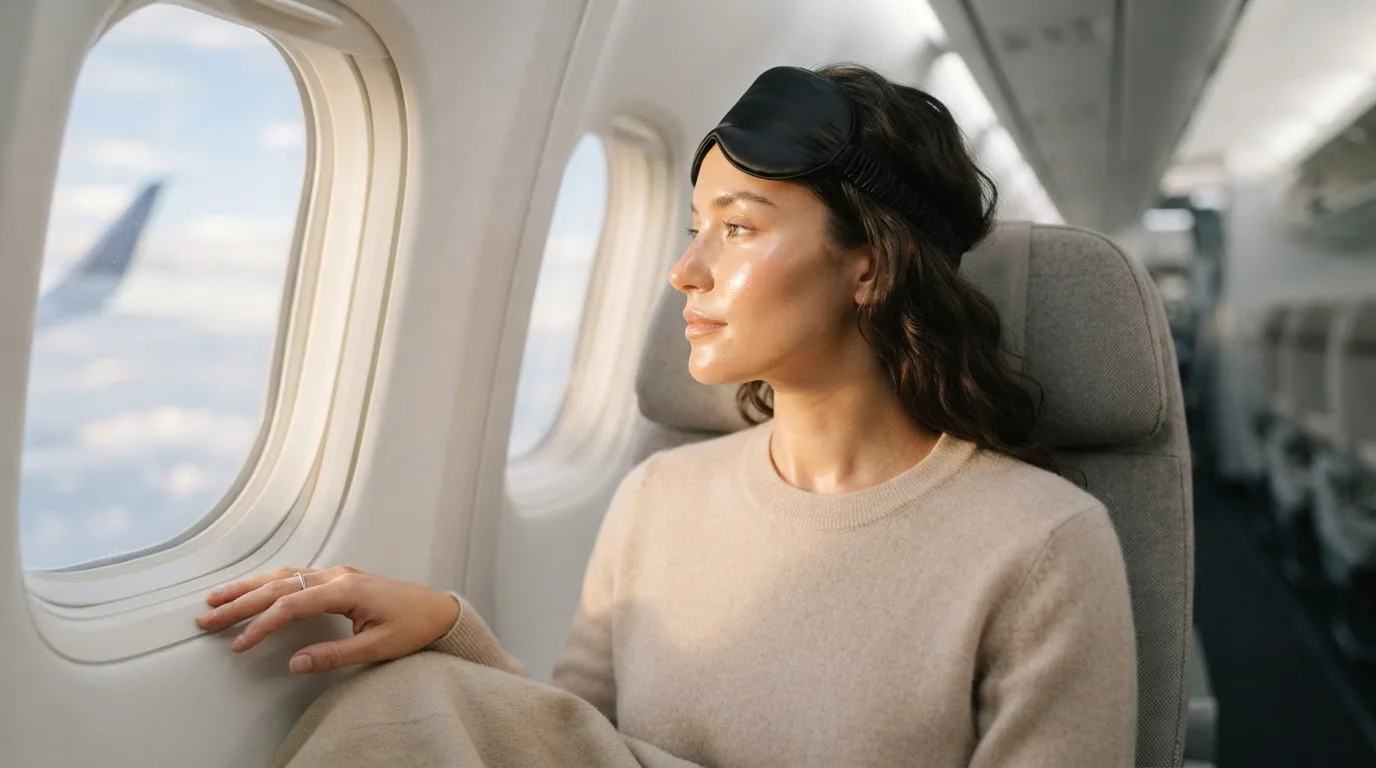
Travel Skincare: Protect Your Skin on Flights and Beyond
Consider what happens during a five-hour flight. It can stress skin faster than a week of city pollution. Cabin air holds a fraction of the humidity a skin barrier is built for. The effects show up within hours. Tightness. Dullness. Flare-ups that arrive just before the vacation photos do.
The good news is that most travel skin damage is predictable. And what is predictable is preventable.
Here is how to think about it. Skin is a barrier, and barriers need moisture. On the ground, the environment helps maintain that balance. On a plane, it actively works against you. The cabin air pulls water from the skin, the recycled atmosphere strips natural oils, and stress hormones from travel can trigger inflammation. By the time you land, the skin has been through a miniature stress test.
But that stress is not random. Most in-flight skin issues trace back to dehydration, barrier disruption, and sudden changes in routine. None of that requires a medical degree to understand. The tightness around the cheeks, the faint crease across the forehead, the way makeup settles into lines that were not there at boarding are all connected.
The fix is not complicated. It starts with knowing exactly what the flight environment does to the skin, then building a small kit of habits that protect it. Hydrating layers, occlusive ingredients, smart timing, and a few simple travel rules can keep skin calm from takeoff to landing.
That is what this guide covers: the specific ways travel disrupts skin, the early warning signs to notice, and the preventive steps that make the biggest difference. A thirty-step routine is unnecessary. A practical, science-backed approach can get there.
Start with the mechanics. The reasons travel wreaks havoc on skin come down to a few conditions that begin well before the plane doors close.
Why Travel Wreaks Havoc on Your Skin
Cabin air aboard a commercial flight is brutally dry. Humidity levels routinely drop below 20 percent, and sometimes far lower. For perspective, the Sahara Desert hovers around 25 percent. Skin is suddenly working in conditions it was never built for. That dry air pulls moisture out of the stratum corneum, the outermost protective layer, faster than it can replenish. Barrier strain can show up within hours. The result is a compromised barrier, and that tight, parched feeling is a signal worth heeding.
Pressure changes add another burden. At cruising altitude, cabin pressure simulates an elevation of roughly 6,000 to 8,000 feet. Lower pressure means less oxygen in the air, which affects circulation and slows cellular turnover. Repair mechanisms get sluggish at precisely the moment they need to be working hardest.
Then there is the recirculated ventilation. Filtered air keeps the cabin habitable, but the same air loops through continuously. Combined with low humidity, this strips the lipid barrier that binds skin cells together. Once that barrier weakens, moisture escapes and irritants sneak in. Tightness and dullness follow quickly.
Skin science explains why this cascade happens. Skin relies on a slightly acidic pH, around 4.5 to 5.5, to maintain its acid mantle. That acid mantle is the first line of defense against bacteria, pollution, and environmental stress. When cabin air throws the barrier off balance, pH shifts, and the entire ecosystem of skin suffers. Taking a closer look at overall skin health before flying gives a baseline to return to when things go sideways.
Arrival introduces its own variables. A new climate, scorching or freezing, forces skin to adapt overnight. Different water chemistry can leave residues that trigger sensitivity or clogged pores. Jet lag disrupts the circadian rhythm, and skin runs on the same internal clock as the rest of the body. The go-to routine may stop performing the way it did at home. The products have not changed. The environment around the skin has.
The most common traveler complaints trace back to this same sequence. Tightness is barrier compromise in real time. Dullness signals slowed cell turnover and dehydration. Congestion and unexplained breakouts point to a disrupted pH and shifting microflora. None of these are random. Each one is a clue about what skin is struggling with.
What exactly happens to moisture at 35,000 feet? The in-flight dehydration process starts with the relationship between the air being breathed and the water the skin is losing.
The Science of In-Flight Dehydration
Relative humidity in a cabin can drop to single digits. That means the air actively pulls moisture from anything it touches, including the skin. Every exhaled breath carries water vapor, but that does nothing to hydrate. The cabin environment creates a constant vacuum effect on the skin's surface, accelerating transepidermal water loss, the scientific term for water evaporating from the stratum corneum faster than the body can replenish it.
The skin's barrier depends on that stratum corneum staying intact. Skin cells are the bricks, and the mortar is a lipid matrix made of ceramides, cholesterol, and fatty acids. That lipid matrix keeps moisture locked in and irritants out. Low cabin humidity stresses those lipids. They become less ordered, more brittle, and tiny cracks start to form. Once the barrier is compromised, water escapes even faster. A vicious cycle takes hold within hours.
Why do the effects appear so soon? The stratum corneum is directly exposed to the dry air. Within an hour or two, tightness, dullness, or fine lines that suddenly look deeper may appear. This is surface-level dehydration, and it is a clear signal that the barrier is struggling.
Humectants behave differently at altitude. Humectants like hyaluronic acid and glycerin work by drawing water toward them. On the ground, they pull moisture from the air and the deeper layers of skin, keeping the surface plump. But in a cabin with almost no water vapor in the air, humectants have nothing to grab. So they pull water from the lower layers instead, potentially making dehydration worse. A heavy dose of hyaluronic acid right before takeoff, without a proper seal, can backfire.
The solution is to pre-load hydration and reinforce barrier lipids before ever stepping on the plane. Apply a humectant to lightly damp skin, then immediately follow with a moisturizer rich in ceramides and fatty acids. That combo helps rebuild the lipid matrix and creates a physical seal to keep water where it belongs. If the barrier is already compromised, a targeted barrier repair routine makes a difference for travel and beyond.
What about misting? It feels nice for about thirty seconds. But in a low-humidity cabin, that water evaporates rapidly, and the evaporation process actually pulls additional moisture from skin. Frequent misting can leave the skin more dehydrated than before. A good pre-flight routine is the real answer, and it starts before boarding.
Pre-Flight Prep: Protect Skin Before the Boarding Gate
The 24 hours before a flight are the skin's dress rehearsal. This is not the time for a science experiment. Leave experimental actives in the drawer and put away the aggressive exfoliating peel. If skin reacts badly, the dry cabin air will make it worse. A calm, familiar routine is the surest way to arrive with healthy skin.
Keep cleansing gentle. Morning and night, choose a soft cream or gel cleanser that does not leave the face tight. Pat skin dry instead of rubbing. Then hydrate thoroughly. Layering a hydrating toner and a lightweight essence can do more than a shelf full of fancy serums. Look for glycerin, hyaluronic acid, or panthenol. These ingredients pull water into the skin and help hold it there. Drink plenty of water too. Hydration from the inside matters just as much as what is applied on top.
Before leaving for the airport, seal all that moisture in with a barrier-supporting moisturizer. Think of it as a shield against the cabin's low humidity. A pea-sized amount of ceramide-rich cream, or a slightly thicker balm for very dry skin, will keep the barrier strong. Do not forget lips. A rich lip balm should be the last thing applied before grabbing the bag.
On the morning of the flight, keep things simple. A gentle rinse or cleanse, a few spritzes of thermal water or toner, the usual moisturizer, and sunscreen if there is daylight. That is all that is needed. Long security waits often mean rushing, standing in stuffy queues, and touching the face with anxious hands. Keep the routine short so calm stays and skin stays comfortable.
Departure season changes the formula. Flying in winter means facing both cold outdoor air and dry indoor heat. Choose a richer moisturizer and perhaps a facial oil to lock things in. In summer, a lighter gel moisturizer can work, but barrier support still matters. The exact balance depends on skin type and destination. A seasonal skincare routine guide can help adjust with confidence.
Once through security and settled in the seat, the routine can stay just as simple. A handful of targeted products will keep skin comfortable for hours.
The Minimal In-Flight Skincare Routine
Plane cabins are a desert. The recycled air saps moisture, leaving skin tight, dull, and prone to congestion. A thick sheet mask might feel like self-care, but it is a hygiene hazard and a makeup magnet. It sits on the face, collecting germs from the tray table and seatback pocket. Save intensive treatments for the hotel room.
The real goal in the air is preservation. Maintaining the barrier and keeping skin comfortable requires just a few steps.
First, a gentle cleanse. A micellar water wipe is ideal. It cuts through airport grime without stripping skin. No full foaming wash is needed. A quick pass resets the canvas.
Next, a hydrating essence. This is the workhorse of the routine. Look for one with hyaluronic acid or glycerin. Pat it into damp skin to lock in that initial burst of hydration. The layering effect is what counts.
Then, seal it in with a light occlusive moisturizer. A simple formula with squalane or ceramides traps hydration and prevents transepidermal water loss. A basic, reliable moisturizer works best at 38,000 feet.
Finish with a thick layer of lip balm. Lips are some of the most delicate skin on the body. They feel the dryness first.
New actives can wait. A flight is not the time to introduce a strong retinoid or exfoliating acid. Low humidity and pressure can amplify irritation. Stick to what skin already knows.
A note on sun protection. It is a common myth that airplane windows block all UV rays. They block UVB, but UVA rays still penetrate at cruising altitude. That means exposure to skin-aging and pigmentation-triggering radiation occurs even above the clouds. Apply sunscreen as the last step, or choose a moisturizer with SPF. Many sunscreens now feel light enough for daily wear, so choose one that will actually be reapplied.
The stripped-down routine is practical and deliberate. It acknowledges the reality of flight and works with it. This approach fits the skinimalism trend, where doing less supports healthier, more resilient skin. Discipline outperforms elaborate rituals in the air.
When you land, the environment changes again. The cabin's dryness gives way to a new climate, and skin needs another adjustment.
Climate Shock: Adapting to Your Destination
Skin is a creature of habit. It gets used to a home climate, water, and air. Then stepping off a plane into Bangkok humidity or a high-altitude ski resort, it has no idea what hit it. That sudden shift is climate shock. The barrier needs to recalibrate quickly.
Moving from humid to dry air strips moisture from the surface. Skin may feel tight, flaky, or irritated. This is a moisture loss issue that requires different care. In dry climates, more occlusion is needed. Richer creams, balms, and oils lock water in. A light gel moisturizer that works in Singapore can evaporate within minutes in the desert.
Humidity is the opposite challenge. Skin is already surrounded by moisture in the air. It does not need heavy layers. Piling on thick creams can clog pores and trigger breakouts. Switch to lightweight gel textures, hydrating serums, and water-based sunscreens. Let skin breathe.
Cold climates bring their own stress. Low temperatures constrict blood vessels, slow down cell turnover, and weaken the barrier. Windburn is real. Protect skin with barrier creams containing ceramides, and avoid harsh cleansers that strip natural oils. Tropical heat and UV present another challenge. Sweat and oil production ramp up. Light, non-comedogenic products and diligent sun protection are the way through.
Patience is important. The skin's microbiome and barrier need time to adjust. Some skin takes several days to fully acclimate, so do not overhaul the entire routine on arrival. Make small shifts. Add a richer moisturizer at night in dry air. Swap a heavy cream for a gel in humidity. Pay attention to signs of dehydration versus dryness; they require different solutions. If unsure, the guide on dry vs dehydrated skin can help tell them apart.
The home routine is a starting point. Adapt it to where you are. Listen to the skin. It will tell you what it needs. Having the right products on hand makes these adjustments easier, whether in an airport lounge, hotel bathroom, or train seat. A compact kit covers most situations.
Hotel, Airport, and Travel Kit Essentials
Travel skincare faces a new set of challenges the moment you step into an airport. The water is different. The air is different. Skin feels the difference immediately.
Hotel bathrooms are notorious for hard water. Mineral buildup can leave skin feeling tight and irritated. It can also make it harder for other products to work effectively. A gentle cleanser is the first line of defense. It washes away travel grime and hard water residue without stripping the moisture barrier. If hard water is a persistent issue, the guide on hard water skincare explains exactly why and how to counteract it.
Then there is the air conditioning. It runs constantly in hotels and airplanes, quietly pulling moisture from the air. A rich barrier balm is a solid defense. Think of it as a shield that locks in hydration and keeps skin resilient against dry, recycled air. The eye area is often the first place to show the strain of travel. Puffiness, dark circles, dryness. An eye cream targets this delicate area and helps the face look refreshed even on limited sleep.
If only three products are packed, these are them. A gentle cleanser. A barrier balm. An eye cream. This trio covers the fundamentals of travel skincare: cleanse, protect, target. It fits in a small pouch and handles the vast majority of what skin will face on the road.
It is easy to focus entirely on the face and forget the rest. Hands and neck face the same dry air and frequent washing. They show signs of travel just as much. Giving them extra moisture makes a difference. The hand and neck skincare guide covers how to keep them looking their best throughout any journey.
Once the kit is sorted, attention turns to recovery. Landing in a new time zone disrupts sleep, and sleep disruption shows up quickly on skin.
Jet Lag, Sleep, and Recovery After Landing
Jet lag does more than make the mind feel foggy. It disrupts the biological clock, and skin feels it immediately. When circadian rhythm is thrown off, the body perceives it as stress. Cortisol rises, which interferes with the skin's overnight repair cycle. That repair work is supposed to happen while sleeping, but a confused clock delays the process. The result is a tired, dull appearance that no amount of hydration can fix. Moisture alone will not restart internal renewal; the sleep schedule has to sync back up. The relationship between sleep and skin health is worth reviewing before any trip.
So what happens after landing? The temptation is to rescue skin with a barrage of active ingredients. Some people immediately reach for strong exfoliants or potent serums. That is a mistake. The barrier is already vulnerable from the flight, pressure changes, and schedule switch. Piling on corrective products while it recalibrates invites irritation and redness. Resist the impulse. Instead, focus on a reset that prioritizes internal balance over external fixes.
Start with hydration. Drink a large glass of water before grabbing luggage. Then return to the basic routine as quickly as possible. A gentle cleanser, a simple moisturizer, and a layer of protection. That is it. Returning to a consistent routine signals to skin that things are normalizing. Timing matters too. Applying evening skincare at the correct local time helps cue the circadian rhythm to adjust faster. A circadian skincare guide offers practical advice on syncing products with an internal clock.
Above all, prioritize sleep. It is the single most powerful recovery tool. Get as much rest as possible in the first two nights after landing. Let the body find its new normal before critiquing the mirror. Skin catches up once sleep does.
After those first recovery nights, learning from the trip begins. Tracking skin during the transition turns random observations into useful patterns.
Track Your Skin's Travel Recovery
Travel skin rarely behaves the way expected. A perfect routine is packed, and skin still reacts unpredictably. Or it suddenly looks incredible with no explanation. The lack of logic is frustrating. Knowing what to keep, what to change, and what to drop when returning home requires a record. Without it, guessing takes over.
Skin changes visibly over the course of a trip. The airplane cabin dehydrates it. New water and climate shock it. Stress and sleep disruption inflame it. Looking in the mirror after a week away reveals a complex reaction to the environment, stress, and schedule changes. Products are just one variable in a much larger equation. That is why consistent photo documentation is valuable. It helps separate genuine travel effects from routine results or product reactions.
The process is simple. Take a standardized selfie before leaving. Take another one during the trip. Take a final one when returning. Keep lighting and angle consistent. This creates a timeline. The exact moment a breakout started becomes visible. When skin looked its best becomes clear. Reliance on memory stops, and evidence is used instead.
This is where structured photo analysis helps. Instead of relying on a fuzzy memory, compare images side by side. Tools designed for this kind of tracking help spot subtle shifts that the naked eye might miss. For a deeper look at how standardized photos can transform a routine, the guide on AI skin photo analysis from selfies breaks down the process. It turns a simple snapshot into actionable data.
When these three clear pictures are available, decision making becomes simple. Did skin love that heavy barrier cream during the dry flight but hate it in the humid city? Keep it for travel, drop it for home. Did the new gentle cleanser keep skin calm through the chaos? That is a keeper. This process protects against throwing out a perfectly good product just because skin was stressed from a five-hour delay. It also prevents buying a full size of something that only worked because of a specific climate.
Tracking through a trip gives back control. Reacting to every temporary change stops, and understanding actual needs begins. The evidence needed to build a smarter, more resilient routine is gathered.
A flight is a controlled stress test. The environment changes, the routine shifts, sleep suffers. How skin responds tells exactly where it needs more support. That is valuable information.
Preparation wins every time. Travelers who arrive with glowing skin planned for the conditions in advance. They started days before departure. They hydrated. They simplified their routines. They gave their skin a buffer against dry cabin air and inevitable schedule disruptions. Gentle consistency beats aggressive rescue plans. Skin wants the same familiar products in the same sensible order, even when time zones change.
The days after landing matter just as much as the flight itself. This is where recovery happens. Skin often looks fine for the first day, then reacts to accumulated stress. Patience matters here. Keep the routine gentle. Give sleep a chance to repair what the journey disturbed. Resist the urge to over-exfoliate or pile on treatments. That approach usually makes things worse.
Track everything. Take a photo each morning. Jot down how the skin feels, what the weather was like, what was eaten, how sleep was. Over time, patterns emerge. Maybe skin always flares after red-eye flights. Maybe a particular climate brightens the complexion. Maybe the moisture barrier needs extra support in dry destinations. Each trip adds a new data point. Each point refines the routine.
This turns every journey into a learning opportunity. Instead of panicking at the first blemish or dry patch, the pattern is recognized. Adaptation happens. Preparation improves next time. Travel becomes less stressful for skin and for the traveler.
Good skin on the road comes down to planning. Luck is a minor character. Preparation, gentle consistency, and honest observation outperform emergency fixes. Let skin show what it needs. Build a plan around that feedback.
Drafted using Lumino AI.
This content is for informational purposes only and is not medical advice.
Learn how we review skincare guidance in our methodology.
Last updated: October 22, 2026
Written by
Lumino AI