When Does Skincare Expire? Shelf Life and Storage Guide
You know the feeling. You reach for your favorite serum, the one you swore by last winter, and something is off. The texture has gone grainy. Or maybe the color is a little darker than you remember. Perhaps you find a forgotten moisturizer tucked behind a bottle in your bathroom cabinet and pause. Is it still safe to use? We have all been there.
The honest answer is that most of us hold onto skincare far longer than we should. It feels wasteful to toss a half-full bottle. But here is the truth: expired skincare is not just less effective. It can actively harm your skin. Dermatologists agree that products past their prime can cause irritation, trigger breakouts, and even lead to infections. Preservatives break down over time, allowing bacteria and mold to thrive. That once-luxurious cream becomes a breeding ground for trouble.
This article will walk you through how long different products actually last, from cleansers to sunscreens. You will learn how to read those tiny symbols on the back of packaging. We will cover the telltale signs of spoilage, like changes in smell, color, or consistency. And you will pick up simple storage habits that keep your products effective for their full lifespan.
Think of it this way. Skincare is a bit like food. You would not eat a yogurt that sat in a warm car for three months. Your skin deserves the same respect. A product that smells like play dough or has separated into an oily mess is telling you something. Listen to it.
The good news is that a little knowledge goes a long way. Once you know what to look for, you can protect your skin and your wallet. So before you slather on that mystery cream, let us get clear on what is happening inside the bottle. Because the science behind why skincare expires is fascinating and it explains everything.
Why Skincare Expires: The Science of Degradation
Here is the thing about your favorite serum. It is alive. Well, chemically speaking. Every bottle is a carefully balanced ecosystem of active ingredients, water, oils, and emulsifiers. To keep that ecosystem stable, formulators add a preservative system. This system fights off bacteria, mold, and yeast. It keeps ingredients from separating. It maintains the pH. But here is the catch. That preservative system has a lifespan. It is working from the moment it is bottled. Over time, its effectiveness fades. Once it fails, the entire product becomes unstable. The clock is ticking from day one.
Then there is oxygen. Oxygen is aggressive. It reacts with the ingredients in your formulas, changing their chemical structure. This process is called oxidation. You see it when a sliced avocado turns brown or when oil goes rancid. The same thing happens inside your serum bottle. This is especially true for the ingredients you likely spend the most money on. Antioxidants are designed to fight free radicals in your skin. But they are incredibly vulnerable to oxygen themselves. Vitamin C, in its pure L-Ascorbic acid form, is famously unstable. It degrades quickly when exposed to air and light. The same goes for many plant oils and antioxidants. Research suggests that an oxidized antioxidant can actually create free radicals on your skin instead of neutralizing them.
Retinoids are another powerhouse ingredient with a short shelf life once opened. These molecules are photoreactive and highly unstable. They need specific packaging and careful storage to stay effective. When they degrade, they lose their ability to smooth fine lines and refine texture.
The third culprit is you. Well, your fingers. Every time you open a jar or dip a finger into a pot, you introduce new microbes into the product. Your bathroom is warm and humid. It is the perfect environment for bacteria and mold to thrive. The preservatives are there to protect the product from this exact scenario. But they can only do their job for so long. Over time, the microbial load builds up. This is why dermatologists agree that jar packaging is risky for products with high active ingredient loads.
So what happens when you use a product past its prime? The effectiveness drops. Your expensive vitamin C serum becomes a bottle of brown water. Your retinoid cream loses its punch. But the real risk is bigger than wasted money. Expired products can compromise your skin barrier. Oxidized oils are inflammatory. They can cause irritation, redness, and breakouts. A product that has lost its preservative battle can harbor harmful bacteria. Applying this to your skin can lead to infections, contact dermatitis, and a disrupted barrier. A healthy barrier is your skin's first line of defense. When it is compromised, your skin becomes sensitive, dehydrated, and prone to congestion.
This is why understanding the timeline matters. It is why your products come with Period After Opening symbols and batch codes. Knowing how to read these marks is your best defense against using a product that is secretly past its prime.
How to Read Expiration Dates and PAO Symbols
Let’s demystify those tiny labels. You’ve seen them: a printed date like “EXP 12/25” stamped on the box, or a little open jar icon with “6M” or “12M” inside. They look simple, but they mean different things. The printed expiration date is straightforward. It tells you the last day the manufacturer guarantees the product’s full efficacy and safety. This system is common in the United States and is required for SPF products. Sunscreen loses its UV protection over time, so that date is non-negotiable.
The Period After Opening symbol is another story. That open jar with a number tells you how many months the product remains good after you first open it. The clock starts ticking the moment air hits the formula. Not when you bought it. Not when it arrived in the mail. When you twist off the cap and break the seal. This is a critical distinction. A moisturizer with a 12M symbol that sat unopened on your shelf for six months still has a full twelve months of shelf life from the day you finally open it.
Here is where it gets tricky. Products without preservatives may expire faster than the PAO suggests. Natural or water-free formulas can be especially unpredictable. Preservatives exist for a reason. They stop bacteria, mold, and yeast from turning your favorite cream into a science experiment. If a product relies on essential oils or high concentrations of alcohol instead of traditional preservatives, its real lifespan might be shorter. The same goes for anhydrous balms and oil-based serums. They can go rancid before the icon says they should. Trust your nose. If something smells different, looks separated, or feels gritty, toss it regardless of the date.
Learning to read these symbols is your first line of defense. Pair that knowledge with a solid understanding of what is actually in your bottles. Our skincare ingredients glossary can help you identify which preservatives and stabilizers are doing the heavy lifting. And if you are curious about how long your sunscreen truly lasts, the SPF guide covers that in detail.
Now that you know how to decode the labels, the next question is practical. How long does each type of product actually last? A cleanser and a retinol cream live very different lives on your shelf. The next section breaks it down by product type so you know exactly when to say goodbye.
Shelf Life by Product Type: When to Toss Each One
Let’s get specific. A cleanser is your low maintenance friend. Unopened, it can sit pretty for one to two years. Once you open it and introduce water and air, you have six to twelve months before it starts losing effectiveness. Moisturizers follow a similar rhythm. They last about six to twelve months after opening. Pay attention to the texture. If it separates or smells off, it’s time.
Serums are where things get delicate. Vitamin C serums are the divas of your routine. They oxidize fast. You get three to six months after opening. After that, the ingredient turns brown and loses its punch. For other serums like hyaluronic acid or niacinamide, you have a comfortable six to twelve months. Retinoids fall into the same window. They degrade with light and air, so keep the lid tight and store them away from windows. Six to twelve months is your safe zone.
Sunscreen deserves special attention. Unopened, it lasts two to three years. But always check the expiration date on the bottle. Once that date passes, the filters stop working. You might as well be applying lotion. Eye creams are tricky. You dip a finger in, then dip again. That constant introduction of bacteria cuts their life to three to six months. Face oils are more stable. You get six to twelve months. But oils high in unsaturated fatty acids like rosehip or evening primrose turn rancid faster. Trust your nose. If it smells like old cooking oil, toss it.
Exfoliating acids, both AHAs and BHAs, stay effective for six to twelve months. They are sensitive to temperature changes. Keep them cool and out of direct sunlight.
Here is a quick reference table for your bathroom mirror.
| Product Type | Unopened | After Opening |
|---|---|---|
| Cleanser | 1-2 years | 6-12 months |
| Moisturizer | 1-2 years | 6-12 months |
| Vitamin C Serum | 1-2 years | 3-6 months |
| Other Serums | 1-2 years | 6-12 months |
| Retinoids | 1-2 years | 6-12 months |
| Sunscreen | 2-3 years | Check date |
| Eye Cream | 1-2 years | 3-6 months |
| Face Oils | 1-2 years | 6-12 months |
| Exfoliating Acids | 1-2 years | 6-12 months |
Knowing these timelines helps you plan your routine. It also saves you money. You won’t buy a backup vitamin C serum only to find it brown before you finish the first bottle. For more on choosing the right active, our vitamin c skincare guide breaks down formulations and storage tips. And if you are still building your lineup, the perfect skincare routine shows you how to layer these products without wasting a drop.
But what happens when you lose track of time? Or when a product looks fine but smells strange? That is where your senses become your best tool. Next up, we cover the clear red flags that tell you a product has turned.
Signs Your Product Has Gone Bad
Your senses are your first line of defense. If a product suddenly looks, feels, or smells different from when you first opened it, your skin is probably about to get a very unpleasant surprise.
Color changes are often the most obvious giveaway. A vitamin C serum that starts out clear or pale yellow may turn a deep brown or orange. That means the active ingredient has oxidized and is no longer effective. Creams can also yellow over time, especially those with oils or botanical extracts. If your moisturizer used to be a soft white and now looks like old butter, trust your eyes.
Texture tells a different story. You might open a jar and find the product has separated into layers. Oil floating on top, water sitting at the bottom. Or you might notice graininess where there used to be a smooth cream. That grittiness can be crystals forming from ingredients that have destabilized. Some products curdle, turning lumpy like spoiled milk. Others thin out or thicken unexpectedly. A lotion that was once silky may now feel watery or tacky. These changes mean the emulsion has broken down and the preservative system is failing.
Smell is perhaps the most reliable alarm bell. A rancid oil smell is a dead giveaway. Think old cooking oil or stale nuts. Some products develop a metallic odor, like copper or iron. Others go sour, with a faint yogurt-like tang that should not be there. And sometimes the original scent just disappears entirely. If your favorite cream once had a light lavender aroma and now smells like nothing, the fragrance has evaporated and the formula may be compromised.
Performance changes are the final red flag. You apply a product you have used for months and suddenly your skin stings, burns, or turns red. That is not normal. It means the ingredients have broken down into irritants or bacteria have moved in. Even if everything looks and smells fine, a new burning sensation is your skin telling you something is wrong. This is especially important if you have a compromised barrier. If you are already dealing with sensitivity, using spoiled products can make things much worse. For more on protecting your skin’s barrier, check out our guide on common skin barrier repair mistakes.
And here is the tricky part: sometimes a product can be perfectly fine for months and then turn bad overnight. You might not notice until you put it on your face. That is why it pays to be suspicious. If something feels off, just toss it. The cost of replacing a product is far lower than the cost of treating a reaction or infection. Your skin does not need that drama.
One more thing to keep in mind: not every change means the product is expired. Sometimes your skin reacts because it is adjusting to a new active ingredient. That is called purging, not spoilage. If you are unsure whether your skin is purging or breaking out, we have a detailed breakdown that can help you tell the difference.
So you have spotted a red flag. Now what? Can you still use that slightly separated serum if you shake it hard enough? Is there any way to salvage a cream that smells a little off? The next section tackles those questions head on. We will walk through the real risks of using expired skincare and the rare exceptions where a product might still be safe.
Can You Use Expired Skincare? Risks and Exceptions
Let's be honest: you have probably used something past its prime. That half empty moisturizer hiding in the back of your bathroom cabinet. A sunscreen from last summer that still has a few squirts left. It feels wasteful to toss it. But here is the truth: using expired skincare is a gamble, and the odds are not in your favor.
The biggest risk is bacterial contamination. Every time you dip your fingers into a jar or press a pump, you introduce microbes. Over time, those microbes multiply. The preservatives in the formula are designed to keep them in check, but they break down. Once that defense is gone, you are essentially spreading bacteria on your face. That can mean breakouts, contact dermatitis, or even a full blown infection. Dermatologists agree that this is especially dangerous around the eyes or on broken skin.
Then there are the ingredients themselves. Many active components oxidize after their shelf life. Vitamin C turns brown and can actually irritate your skin instead of brightening it. Retinols lose their punch and can degrade into compounds that cause redness. You might think you are treating your skin, but you could be triggering inflammation instead. For a deeper look at how inflammation shows up on the skin, our guide on skin inflammation can help you spot the signs.
Sunscreen deserves its own warning. An expired SPF is not just less effective. It is effectively useless. The chemical filters break down and no longer absorb UV rays. The physical blockers can clump and leave gaps in protection. You might think you are safe, but you are really just wearing a fancy lotion that does nothing. Sun damage happens fast. That is why we always say to replace sunscreen immediately when it expires. No exceptions. For a full breakdown of how to choose and use SPF properly, check out our complete sunscreen and SPF guide.
Are there any exceptions? A few. Powder formulas like loose eyeshadow or setting powder have very little water, so bacteria struggle to grow. If they look and smell fine, they might be okay a month or two past the date. Unopened products stored in a cool dark place can also last longer than their printed date. But once you open them, the clock starts ticking.
In general, err on the side of caution. Your skin is worth more than a few dollars of old cream. When in doubt, toss it out. And if you want to make your products last longer, the next section covers storage best practices. Temperature, light, and humidity all play a role in how long your skincare stays fresh. Let's talk about how to keep your products in their prime.
Storage Best Practices: Temperature, Light, and Humidity
Think of your skincare products like fresh produce. They have a shelf life, and how you store them makes all the difference. The three biggest enemies are heat, light, and air. Leave a serum in a sunny windowsill or a steamy bathroom, and you're basically fast-forwarding its expiration date. The active ingredients break down faster, and you end up slathering on something that's lost its punch.
Here's the uncomfortable truth: your bathroom is probably the worst place to keep your skincare. All that steam from hot showers creates humidity swings. Temperature spikes every time you run the water. That constant fluctuation weakens preservatives and encourages bacterial growth. Dermatologists agree that a cool, dark, dry spot is ideal. A bedroom drawer or a cabinet away from the shower works perfectly. It sounds boring, but it keeps your products stable and effective.
Now about the skincare fridge trend. Yes, it's cute. And yes, it can help certain formulas. Vitamin C serums are notoriously unstable. Keeping them chilled slows oxidation and extends their potency. Retinoids also benefit from cooler temperatures because they degrade with heat. Eye creams feel refreshing when cold, and the slight vasoconstriction can help with puffiness. But not everything belongs in the fridge. Oils and balms can thicken or separate when chilled, making them harder to apply. Stick to water-based, antioxidant-rich formulas for refrigeration. If you're curious about how antioxidants protect your skin, our complete guide on antioxidant skincare dives deeper into that science.
Air is the third sneaky enemy. Every time you open a jar, oxygen rushes in and starts breaking down ingredients. That's why airless pumps are superior to traditional jars. They seal out air and keep the product untouched until it's dispensed. Jars force you to dip your fingers in, introducing bacteria and oxygen with every use. If you love a product that only comes in a jar, use a clean spatula. But for your most active serums and creams, airless packaging is a game changer. It's one simple switch that dramatically extends the life of your formulas.
Good storage habits lay the foundation, but there's another layer to protecting your investment. How you handle your products day to day matters just as much. That's exactly what we'll cover next: simple hygiene habits that help your skincare last longer and stay safer on your skin. And if you're building a routine from scratch, our skincare routine for beginners can help you choose products worth protecting.
How to Extend Product Life: Hygiene Habits That Help
Let's talk about the habits that keep your products working their hardest. It starts with something simple: your hands. Always use clean, dry fingers or a dedicated spatula. Dipping into a jar with damp hands introduces water and bacteria straight into the formula. That’s an open invitation for mold and spoilage. The same goes for adding water or any other liquid to thin out a product. This disrupts the preservative system and can cause separation or contamination. If a texture feels too thick, it’s time to find a different product.
Close every lid tightly immediately after use. Air is the enemy of active ingredients. It triggers oxidation, which breaks down oils and vitamins. Keeping the seal tight slows that process down significantly. Store your products away from direct sunlight and heat sources. A bathroom windowsill might look pretty, but the UV rays and temperature swings degrade ingredients fast. A cool, dark cabinet is your best friend.
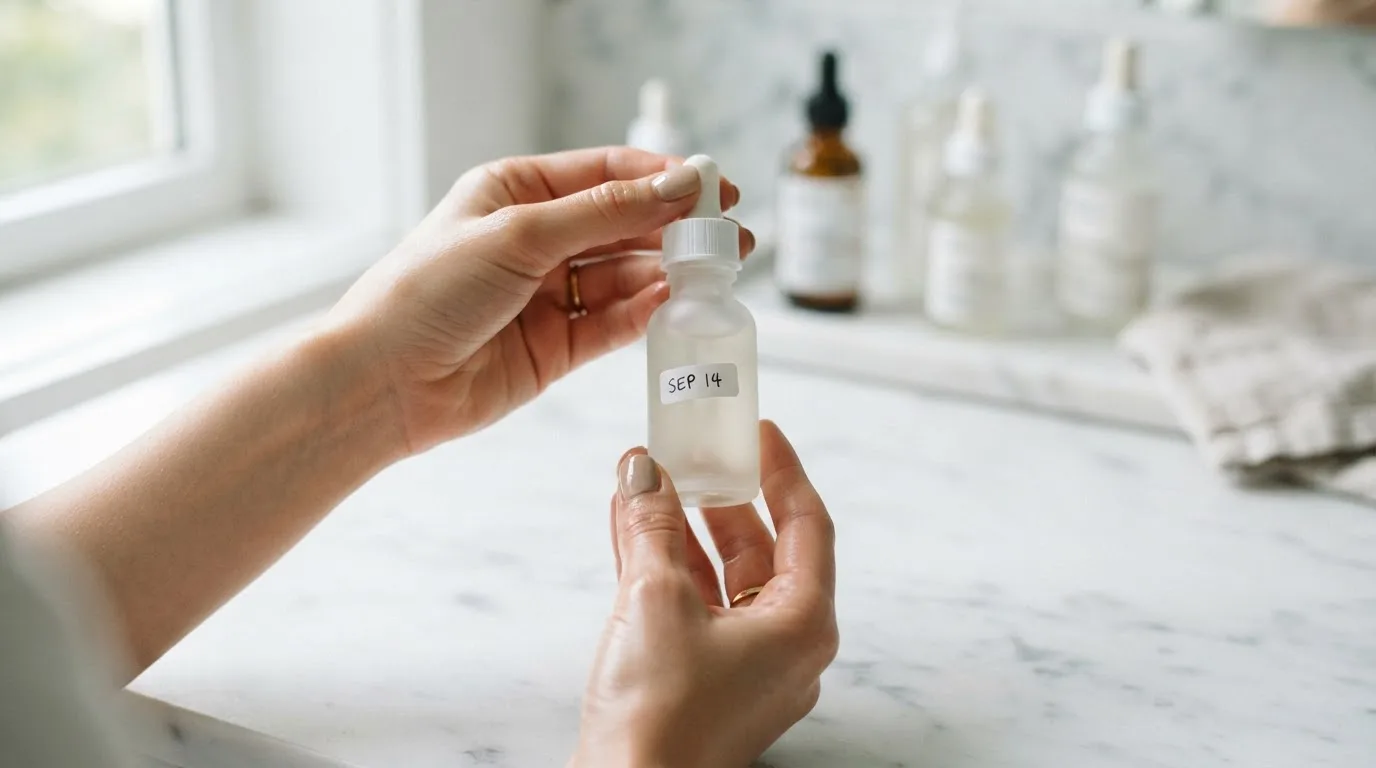
Consider decanting larger sizes into smaller containers. Every time you open a jar, you introduce fresh air. By splitting a big tub into smaller portions, you limit how much air reaches the main supply. Just make sure the new container is clean and dry. Label each product with the date you opened it using a sticker or a marker. It sounds fussy, but it makes a real difference. You’ll know exactly when that serum or moisturizer started its clock. This simple step helps you track freshness without guessing.
These small habits prevent microbial growth and slow oxidation. They keep the formula stable and safe for your skin. Think of it as giving your products a longer, more effective life. And if you’re curious about giving your skin a break from heavy routines, our skin fasting guide explores how less can sometimes be more. For a more streamlined approach, the skinimalism simplified skincare trend offers a fresh perspective on cutting back without cutting quality.
Now that you know how to keep products fresh, the next step is knowing when to let them go. That brings us to building a rotation habit and understanding when it’s time to declutter.
When to Declutter: Building a Rotation Habit
Let's be honest: your skincare shelf can easily get cluttered. You buy products with the best intentions. A new serum here, a different moisturizer there. Before you know it, your collection has outgrown your routine. This is where a seasonal audit becomes a powerful habit.
Every three to four months, take everything out of your cabinets. Line it all up. Look closely at each product. Does the texture seem right? Has the color changed? Does it smell the way it should? If anything feels off, it is time to let it go. Holding onto expired products is a gamble. Research suggests that using compromised formulas can lead to irritation or a complete lack of efficacy. Your skin deserves better.
A smaller, well-curated rotation is far more effective than a sprawling stash. When you keep too many bottles open at once, they sit around for months. Active ingredients oxidize. Preservatives break down. You end up applying a product that has lost its potency. A rotation habit solves this. You keep a few targeted products in active use. You use them up. You enjoy them fully. This approach aligns perfectly with the concept of skinimalism. A simplified routine allows each product to do its job without competition.
Streamlining your collection makes your daily routine easier to follow. A cluttered space can lead to a cluttered mind. You might skip steps because it feels like too much work. A focused routine is a consistent routine. Consistency is the true driver of results. If you are feeling overwhelmed by your current lineup, consider resetting with a beginner-friendly framework. Focus on the pillars of good skin health. A gentle cleanser. A nourishing moisturizer. A protective sunscreen. Build your rotation around these essentials.
Good skincare is not just about what you apply. It is about how you treat the products you own. You care for them by storing them correctly. You honor them by using them while they are fresh. And you respect your skin by knowing when to say goodbye. This mindful cycle of use and declutter keeps your routine effective and intentional. It transforms your bathroom shelf into a sanctuary of active, potent products ready to serve your skin. This brings us to the final piece of the puzzle in the conclusion.
The Bottom Line
Checking expiration dates feels tedious. It is easy to hold onto that half-empty bottle of serum. It feels wasteful to toss something that still looks fine. You convince yourself it is probably still okay. But here is the thing: skincare expiration is about safety. A product that has turned is a risk to your skin. Preservatives break down. Bacteria and mold move in. The ingredients that once soothed and repaired your barrier can now irritate and damage it. Dermatologists agree that applying a compromised product to your skin is a gamble you should never take.
So as you finish reading this, do a quick cabinet audit. Check the dates on every bottle, tube, and jar. Give each product a sniff. Does it smell different? Look at the texture. Has it separated, thickened, or changed color? If anything feels off, let it go. Your skin barrier will thank you. A clean, intentional cabinet is the foundation of a routine that truly works. It is the first step in building a skincare regimen that delivers results every single time.
This is where the habits from the rest of the guide come in. Storing products in a cool, dark place keeps them stable longer. Using clean hands or a spatula prevents introducing bacteria. Closing lids tightly preserves the formula. These small actions protect your investment. They are the difference between a product that works and one that wastes your money. They also protect your skin. A compromised product applied to a compromised barrier is a recipe for disaster. Good habits prevent that.
An effective routine hinges on every single product being in its prime. The number of steps and the price of the ingredients matter far less than freshness. A fresh routine, stored correctly and used consistently, is the most powerful one you can have. It transforms your bathroom shelf from a graveyard of forgotten bottles into a toolkit of active, potent allies for your skin. Each product is ready to perform at its best. There is no guesswork. No worrying about whether a serum has oxidized or a moisturizer has separated. You simply apply and trust that your products are working for you.
Because the best skincare routine is the one that respects your skin at every stage. From the moment you open a product to the moment you say goodbye. Make the audit a regular habit. Your skin deserves products that are working as hard as you are.
Editorially reviewed by the lumino.skin content team.
This content is for informational purposes only and is not medical advice.
Learn how we review skincare guidance in our methodology.
Last updated: November 11, 2026