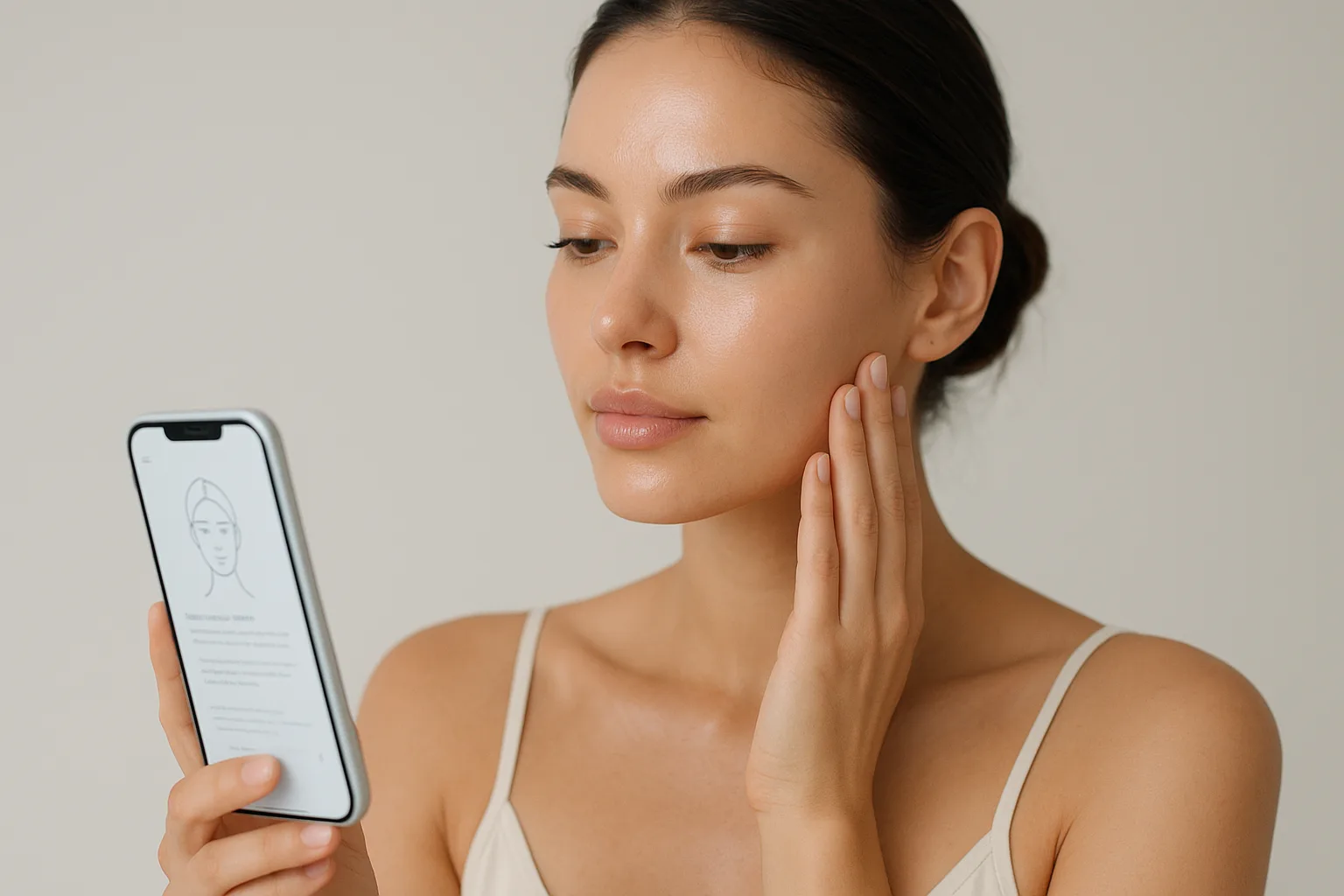
Top 10 AI-Powered Skincare Apps for Personalized Routines in 2026
Your bathroom shelf is a graveyard of products that were supposed to work. The moisturizer your coworker raved about. The serum that went viral on TikTok. The cleanser some influencer called "life-changing." None of them changed your life. Most of them just confused your skin.
The problem was never the products. It was the advice. Generic "oily skin" or "dry skin" labels don't capture what's actually happening on your face. Your skin is a moving target influenced by hormones, stress, weather, diet, sleep, and a dozen other variables. A one-size-fits-all routine was never going to cut it.
That's where AI skincare comes in. A new generation of apps uses computer vision, machine learning, and massive dermatological datasets to analyze your actual skin and build routines tailored to what your face needs right now, not what some quiz guessed six months ago.
We tested the biggest AI skincare apps of 2026, compared their analysis accuracy, feature depth, and real-world usefulness. Here are the ten worth downloading.
How We Evaluated These Apps
Before diving into the list, here's what we looked at:
- Analysis accuracy — Does the AI correctly identify skin type, concerns, and severity?
- Personalization depth — Are routines genuinely tailored, or just surface-level?
- Progress tracking — Can you measure changes over time with real data?
- Ingredient intelligence — Does the app scan and flag problematic ingredients?
- Usability — Is the experience smooth, or do you need a tutorial to navigate it?
- Privacy — How are your photos and data handled?
Every app was tested over a minimum of two weeks using consistent lighting and conditions for photo analysis. Where possible, results were compared against professional skin assessments.
1. Lumino Skin
Best for: Instant free AI skin analysis with no signup
Lumino Skin takes a fundamentally different approach from every other app on this list. There's nothing to download. No account to create. No paywall hiding the good stuff. Upload a selfie on the web, and in under 60 seconds you get a comprehensive AI skin analysis that includes your Baumann Skin Type classification, a breakdown of your key skin concerns, and a personalized AM/PM routine with specific product recommendations.
The analysis engine evaluates pore size, texture, pigmentation patterns, hydration levels, oil distribution, fine lines, and barrier health. What makes Lumino stand out is how it translates that raw analysis into something immediately actionable. You don't get a score and a "good luck figuring it out." You get a step-by-step routine with product picks matched to your skin type and budget.
Because it runs entirely in the browser, there's zero friction. No app store, no storage space, no push notification spam. You get your analysis, your routine, and you're done. That accessibility makes it the easiest entry point into AI-powered skincare, especially for people who are just getting started and don't want to commit to yet another subscription app.
Standout features:
- Free AI skin analysis from a single selfie
- No signup, no download, no paywall
- Baumann Skin Type classification (16-type system)
- Personalized AM/PM routine with product recommendations
- Full skin concern breakdown (acne, aging, pigmentation, hydration, barrier health)
Available on: Web (works on any device with a browser)
2. Radien
Best for: All-around AI skin analysis and adaptive routines
Radien has quietly become one of the most polished AI skincare apps available. The skin analysis is fast and impressively detailed. Snap a selfie and you get a comprehensive skin health score covering acne, dark spots, wrinkles, texture, pores, and hydration.
What sets Radien apart is the adaptive routine engine. Your AM/PM recommendations aren't static. They shift based on weekly progress selfies, so the app adjusts as your skin changes. It also tracks lifestyle factors like sleep quality, water intake, and stress levels, then correlates them with skin changes over time.
The AR skin simulation feature lets you preview projected results four weeks out. It's not perfect, but it gives you a motivating visual of where your skin is heading.
Standout features:
- AI skin analysis with detailed health scoring
- Adaptive AM/PM routines that evolve with your skin
- Lifestyle-skin correlation tracking
- AR simulation previewing 4-week results
- 4.9-star rating with 100K+ users
Available on: iOS, Android
3. Skin Bliss
Best for: Product compatibility and ingredient clash detection
Skin Bliss does something most AI skincare apps overlook: it analyzes the products you already own. Point your camera at your skincare shelf, and the app scans each product, checking for ingredient conflicts, redundancies, and compatibility issues.
The skin analysis is solid too. The face scan identifies your skin type and primary concerns, then builds a routine around products you actually have. If there are gaps or conflicts, it recommends replacements.
With over 2 million users and 847K routines created, the community data makes its recommendations increasingly accurate. The app reports that 84% of users see visible skin improvement, which tracks with the depth of personalization it offers.
Standout features:
- Shelf scanner for product compatibility analysis
- Ingredient clash and redundancy detection
- Routines built around products you already own
- Community-powered recommendations
- 2M+ satisfied users
Available on: iOS, Android
4. Lume Skin
Best for: Product safety scanning and barcode analysis
Lume Skin's strongest play is its product scanner. Snap a photo or scan a barcode, and it cross-references against a database of over 500,000 products, checking for potentially harmful ingredients, allergens, and irritants specific to your skin profile.
The skin analysis covers the standard bases well: acne, wrinkles, dark spots, hydration, and oil levels. But the real value is how it connects analysis to product recommendations. The app builds customizable routines that adapt to weather conditions and even hormonal changes throughout the month.
Standout features:
- Barcode and photo product scanner (500K+ products)
- Ingredient safety analysis personalized to your skin
- Weather-adaptive routine adjustments
- Hormonal cycle-aware recommendations
- Progress tracking with before/after comparisons
Available on: iOS, Android
5. Lovi
Best for: Science-first, marketing-free analysis
Built by former Google and Yandex engineers, Lovi takes a deliberately anti-hype approach. The face scanning is trained by medical professionals, not beauty influencers, and the ingredient analysis evaluates products based on formulation science rather than marketing claims.
The Lovi Score is the standout feature: a brand-neutral rating that evaluates products across effectiveness, skin-type suitability, and safety. When a trendy product scores poorly, Lovi tells you why, backed by formulation logic. It's refreshingly honest in an industry saturated with sponsored recommendations.
Recognized as a top AI skincare app for 2026 by healthcare technology publications, Lovi is what you want if you're tired of being sold to and want straight answers.
Standout features:
- Medical professional-trained AI analysis
- Brand-neutral Lovi Score for products
- Formulation logic over marketing narratives
- Science-based ingredient evaluation
- Recognized by HealthcareTech Outlook 2026
Available on: iOS, Android
6. Freya
Best for: Sensitivity and allergy-aware skincare
If your skin reacts to everything, Freya deserves a spot on your home screen. The AI face analysis provides personalized scores across hydration, texture, acne, dark spots, and aging signs, but its real strength is the sensitivity filter.
Tell Freya about your allergies, sensitivities, and past reactions, and it filters every recommendation through that lens. Products containing your triggers are flagged and excluded automatically. For anyone with reactive, rosacea-prone, or eczema-prone skin, this level of filtering is genuinely useful.
Progress tracking with trend charts helps you spot what's working and what's irritating your skin, turning guesswork into data.
Standout features:
- Sensitivity and allergy-aware filtering
- Personalized scores across five skin dimensions
- Automatic exclusion of known triggers
- Progress tracking with trend charts
- Before/after photo comparisons
Available on: iOS
7. Derm AI
Best for: Clinical-grade severity assessment
Derm AI scans for acne, aging signs, dark circles, dryness, oiliness, and uneven tone, but what makes it interesting is the severity scoring. Instead of just saying "you have acne," it tells you how severe it is on a clinical scale, which helps you decide whether to self-treat or see a dermatologist.
Product recommendations span 13 categories with science-backed ingredient analysis. Routines update every six to eight weeks based on new scans, which mirrors how dermatologists typically reassess treatment plans. The visual timeline feature tracks your skin journey over months.
Standout features:
- Clinical-grade severity scoring
- 13-category product recommendations
- Routine updates every 6-8 weeks
- Visual skin journey timeline
- Science-backed ingredient analysis
Available on: iOS
8. Glo
Best for: Quick routine generation
Glo is the "just tell me what to use" app. Upload a photo, answer a few questions, and you get a complete AM/PM routine in under a minute. It's less feature-dense than some competitors, but the simplicity is the point.
For people who don't want to deep-dive into skin science and just want a clear, actionable routine, Glo delivers without the overwhelm. The AI analysis covers the fundamentals, and the recommendations are sensible and easy to follow. Think of it as the beginner-friendly option in the AI skincare space.
Standout features:
- Routine generation in under 60 seconds
- Simple, no-overwhelm interface
- Photo-based AI skin analysis
- Clear AM/PM routine builder
- Great for skincare beginners
Available on: iOS, Android
9. Ada
Best for: Comprehensive scan-to-routine pipeline
Ada's face scanning covers six key areas: acne, wrinkles, pores, pigmentation, hydration, and texture. Where it shines is the scan-to-routine pipeline. Results flow directly into product recommendations filtered by your ingredient preferences and past scan data.
The comparison feature overlays past and present scans side by side, making it easy to visualize changes. It's a straightforward, well-executed app that does the basics right without unnecessary complexity.
Standout features:
- Six-dimension face scanning
- Ingredient preference filtering
- Scan-based product recommendations
- Side-by-side progress comparisons
- Clean, intuitive interface
Available on: iOS
10. Zena
Best for: Evidence-based guidance and chat support
Zena combines AI skin scanning with what it calls "derm-inspired chat," essentially a conversational interface for asking skincare questions and getting evidence-based answers. It's not a replacement for seeing an actual dermatologist, but it's a useful resource for everyday questions.
The skin diary feature lets you log daily skin conditions, products used, and environmental factors. Over time, this builds a detailed picture of what affects your skin. The recommendations are grounded in cosmetic science, and the app is transparent about its sourcing.
Standout features:
- Derm-inspired conversational chat support
- Skin diary with daily logging
- Evidence-based recommendations
- Environmental factor tracking
- Cosmetic science-grounded advice
Available on: iOS
What to Look for in an AI Skincare App
Not all AI skincare apps are created equal. Before committing to one, here's what matters:
Analysis Quality Over Flashy Features
An app with accurate skin analysis and sensible recommendations beats one with AR filters and gamification every time. Look for apps that explain what they're measuring and why it matters. If the app can't tell you why it's recommending a product, the AI isn't doing much.
Privacy and Data Handling
You're uploading photos of your face. That's sensitive biometric data. Check whether photos are stored locally or uploaded to servers, whether data is encrypted, and whether you can delete your information. Apps that are transparent about their data practices earn more trust.
Ingredient Intelligence
The best apps don't just recommend products by name. They analyze ingredients, flag conflicts with your skin type, and explain why specific actives are or aren't appropriate for your concerns. This is especially important if you have sensitive skin or known allergies.
Realistic Progress Tracking
AI analysis from a single photo is useful, but the real value comes from tracking changes over time. Apps that use consistent measurement methodologies and show clear data trends give you actionable insight, not just a snapshot.
AI Skincare Apps vs. Professional Dermatology
Let's be clear: these apps are not dermatologists. They're powerful tools for daily skincare management, routine optimization, and early awareness of skin changes. But they have limits.
See a dermatologist when you have:
- Persistent acne that isn't responding to over-the-counter treatment
- Suspicious moles or skin growths
- Chronic conditions like rosacea or eczema
- Severe reactions to skincare products
- Any concern that feels beyond cosmetic
AI skin analysis works best as a complement to professional care, not a replacement. Use apps to maintain and optimize your routine between dermatology visits, and to track changes that might be worth discussing with your doctor.
The Bottom Line
AI skincare apps have moved well past the gimmick phase. The best ones in 2026 offer genuinely useful skin analysis, intelligent product recommendations, and meaningful progress tracking. Whether you want a simple routine builder like Glo, an ingredient safety scanner like Lume Skin, or a medical-grade screening tool like Skinive, there's an app that fits your needs.
The common thread across all of these apps is that personalized skincare works better than generic advice. Your skin is unique. Your routine should be too.
If you want the fastest way to get started, Lumino Skin is free, runs in your browser, and gives you a full AI skin analysis with a personalized routine in under 60 seconds. No download, no signup, no catch.
Reviewed by Lumino Editorial Team on March 6, 2026.
This article is for informational purposes only. AI skincare apps are not a substitute for professional dermatological advice. Consult a dermatologist for persistent or severe skin concerns.
Learn how we review skincare guidance in our methodology.
Last updated: March 6, 2026
References
Safety Notes
- AI skin analysis provides general guidance and should not replace professional medical diagnosis.
- Always patch-test new products recommended by any app before applying them to your full face.
If you have persistent symptoms, severe irritation, or sudden skin changes, consult a licensed dermatologist.