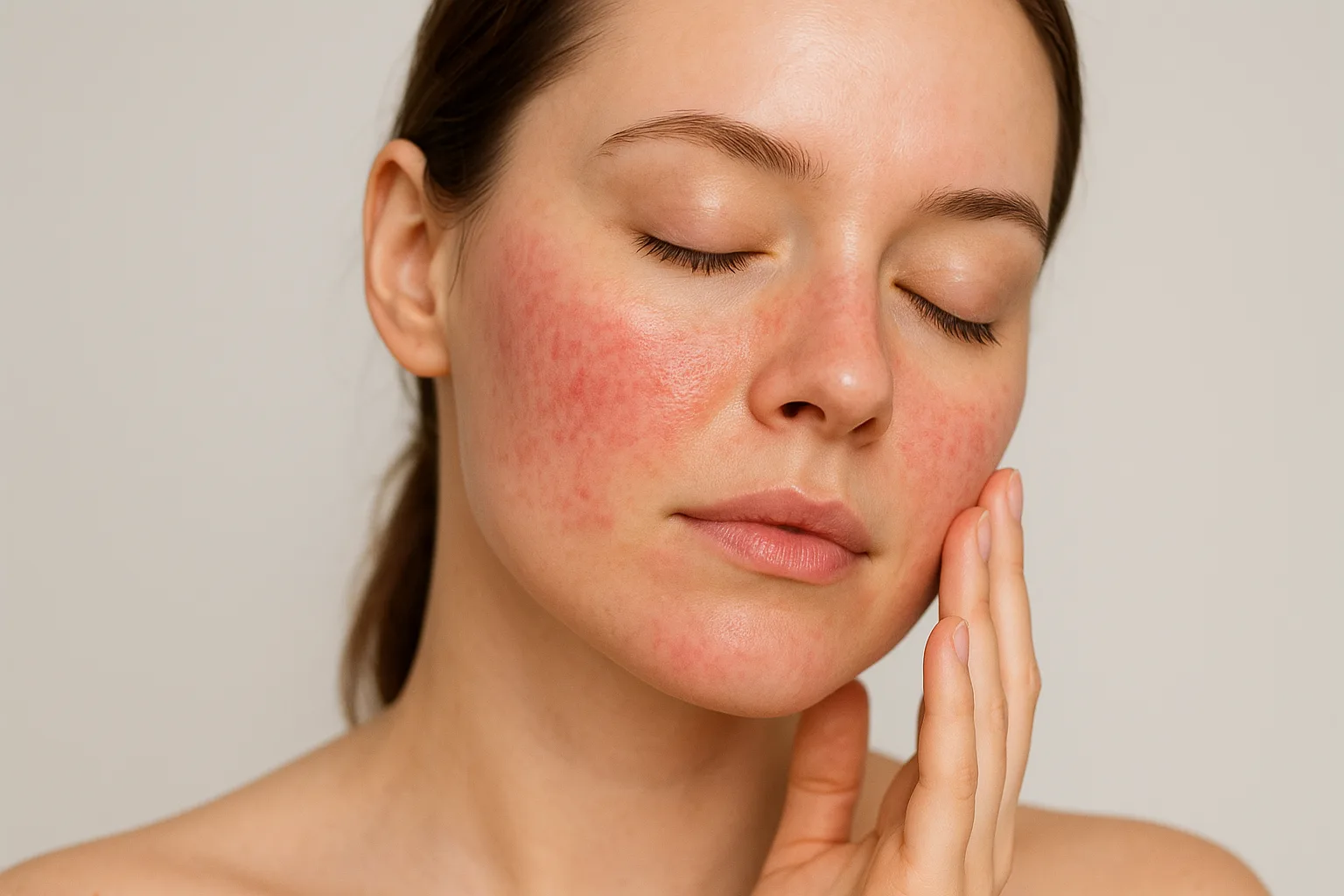
Rosacea: Complete Guide to Triggers, Skincare, and Treatment Options
Rosacea is a chronic inflammatory condition that typically affects central facial skin and often presents as persistent redness, flushing, visible vessels, burning, and sensitivity. In some people, it includes acne-like bumps; in others, redness is the dominant pattern.
Because it is chronic and trigger-sensitive, rosacea management works best as a long-term strategy, not a short treatment sprint.
Answer first: what helps most?
The highest-yield approach is:
- Trigger mapping and reduction
- Barrier-safe skincare
- Timely medical escalation for persistent or moderate/severe disease
Trying many strong products without a trigger plan usually worsens stability.
Rosacea is not just "sensitive skin"
While sensitivity is common, rosacea has specific vascular and inflammatory behavior. This is why some standard acne or anti-aging routines can trigger flares.
Common signs include:
- Persistent central facial redness
- Flushing episodes
- Burning/stinging with routine products
- Visible superficial blood vessels
- Acne-like papules/pustules without classic comedones
If symptoms include eye irritation, dryness, or grittiness, ocular rosacea must be considered and evaluated professionally.
Common rosacea patterns (simplified)
Different phenotypes can overlap:
- Erythematotelangiectatic pattern: persistent redness, flushing, visible vessels
- Papulopustular pattern: inflammatory bumps on a red/sensitive base
- Phymatous changes: skin thickening in selected cases
- Ocular involvement: eye symptoms that may occur with or without severe skin signs
Knowing your dominant pattern helps choose better treatment priorities.
Trigger mapping: your first treatment tool
Most people have a personal trigger mix rather than one single cause.
High-frequency triggers
- Heat and hot environments
- Sun/UV exposure
- Alcohol
- Spicy foods (in susceptible individuals)
- Stress and sleep disruption
- Harsh or fragranced skincare
- Intense exercise without cooling strategy
How to track triggers effectively
Use a daily log for 4 to 6 weeks:
- Flushing episodes
- Meals/alcohol intake
- Weather/temperature exposure
- Product changes
- Sleep and stress notes
This often reveals preventable patterns faster than repeated product switching.
Core rosacea skincare framework
The structure is simple, but consistency matters.
Morning
- Gentle, non-stripping cleanse
- Barrier-supporting moisturizer
- Broad-spectrum sunscreen
Evening
- Gentle cleanse
- Targeted therapy (if prescribed/selected)
- Moisturizer
If your skin repeatedly stings with basic products, start with barrier recovery principles before introducing stronger actives.
Sunscreen is essential in rosacea
UV exposure can worsen redness and trigger recurrent flares. Daily sunscreen helps reduce inflammatory load over time.
For rosacea-prone skin, prioritize:
- Broad-spectrum protection
- Comfortable texture you will use daily
- Low-irritation formula profile
If sunscreen selection is difficult, use The Sunscreen SPF Guide to narrow options.
Ingredient strategy: what tends to help vs irritate
For full ingredient reference, see Skincare Ingredients Glossary.
Often better tolerated/supportive
- Ceramides
- Glycerin
- Niacinamide (in tolerable formulations)
- Azelaic acid (often useful in rosacea care)
- Panthenol and soothing humectants
Often problematic in active flares
- Physical scrubs
- Strong exfoliating acids
- Fragrance-heavy products
- Multiple new actives started simultaneously
- Alcohol-heavy leave-on products
Tolerance varies by person, so controlled introduction is important.
How to introduce products safely
Phase 1: calm baseline (2 to 4 weeks)
- Minimal routine only
- No experimental actives
- Trigger reduction focus
Phase 2: introduce one targeted active
- Start 1 to 2 nights per week
- Keep all other variables stable
- Increase slowly if tolerated
Phase 3: maintenance refinement
- Continue trigger controls
- Sustain what works
- Remove non-essential irritants
This sequence protects adherence and reduces flare cycling.
Rosacea vs acne: why confusion happens
Papulopustular rosacea may look like acne, but management differs.
Useful distinction:
- Acne often has comedones
- Rosacea more often has persistent redness/flushing and sensitivity
If acne is also present, hybrid plans may be required. For acne-specific fundamentals, review How to Get Rid of Acne and OTC vs Prescription Acne Treatments.
Lifestyle adjustments with high clinical yield
Temperature management
- Avoid very hot water on face
- Use cooling breaks in hot environments
- Prefer lukewarm cleansing
Exercise adaptation
- Use shorter intervals if heat-triggered
- Cool skin promptly post-workout
- Rehydrate and avoid prolonged post-exercise overheating
Stress and sleep
- Track flare correlation with sleep disruption
- Build stress-management routines that are realistic and repeatable
These changes are not replacements for treatment, but they reduce trigger burden.
When to escalate to dermatology care
Seek clinical care promptly if:
- Redness persists or worsens despite conservative routine
- Frequent flares disrupt quality of life
- You have painful inflammatory lesions
- Eye symptoms are present (dryness, irritation, gritty sensation)
- You suspect progression beyond simple sensitive skin
Prescription therapies and procedural options may be appropriate depending on phenotype and severity.
Ocular warning signs to never ignore
Urgent professional review is needed if you notice:
- Eye pain
- Persistent redness of eyes
- Blurred vision
- Light sensitivity
Ocular involvement can be underrecognized and should not be self-managed with skincare alone.
12-week practical roadmap
Weeks 0 to 2
- Build minimalist routine
- Start trigger log
- Remove obvious irritants
Weeks 3 to 6
- Evaluate flare frequency and intensity
- Introduce one targeted therapy if stable
Weeks 7 to 12
- Assess trend objectively with photos/log
- Escalate medically if insufficient control
Progress is typically non-linear. Reduced flare intensity and better tolerability are important early wins.
FAQ
Can rosacea be cured permanently?
Rosacea is usually chronic, but many people achieve strong long-term control with structured care and trigger management.
Should I stop all actives forever?
Not necessarily. Many people tolerate selected actives when introduced carefully and used at appropriate frequency.
Is redness always rosacea?
No. Several conditions can mimic redness and sensitivity. Persistent symptoms should be medically evaluated.
Is a beginner routine enough?
A simplified baseline is often the best starting point. If needed, build from beginner routine fundamentals and then layer rosacea-specific adjustments.
Diet, Alcohol, and Rosacea: What the Evidence Shows
Among all the lifestyle factors associated with rosacea flares, dietary and alcohol triggers are some of the most consistently reported across patient surveys and observational research — yet the evidence is more nuanced than a simple list of foods to avoid.
Alcohol, particularly red wine, stands out as the most frequently cited dietary trigger in rosacea. The mechanism is physiologically plausible: alcohol induces vasodilation, which produces visible flushing by increasing blood flow through the superficial facial vasculature. Red wine is more commonly implicated than other forms of alcohol, possibly due to additional vasoactive compounds including histamine, tannins, and tyramine. White wine and spirits also trigger flares in many individuals, though less consistently than red wine. The cumulative vascular load of regular alcohol intake may also lower the flare threshold over time, not just in the immediate hours after drinking.
Spicy foods containing capsaicin — the compound in chili peppers — activate transient receptor potential vanilloid 1 (TRPV1) receptors, which are involved in heat detection and neurogenic inflammation. Capsaicin-induced flushing is a recognized rosacea trigger, though again with significant individual variability. Hot beverages cause transient flushing through a thermal mechanism rather than a chemical one, and switching to cooler temperatures of the same beverage can reduce the response.
The evidence for broader dietary patterns — anti-inflammatory diets, reduced glycemic index, Mediterranean-style eating, lower sugar intake — is less conclusive in rosacea specifically, though plausible given the inflammatory nature of the condition. Several of these patterns have demonstrated systemic anti-inflammatory effects and are associated with better skin health outcomes in general. For more on the relationship between lifestyle, inflammation, and skin, see our guides to sleep and skin health and understanding skin health.
The practical implication is not to eliminate every plausible trigger simultaneously. That approach reduces quality of life without providing useful information about your personal trigger profile. Instead, use the same trigger log recommended for general rosacea management — track meals, alcohol type and quantity, and flare timing together. Most people find that their meaningful dietary triggers are a shorter list than the general guidance suggests, and targeted avoidance is more sustainable than wholesale restriction.
Makeup and Camouflage Strategies for Rosacea
Rosacea-related redness is often one of the most visible and distressing aspects of the condition. Effective cosmetic camouflage does not treat the underlying inflammation, but it meaningfully reduces its day-to-day visual impact and can support quality of life while longer-term management strategies take effect.
Color correction is the most efficient first step. Green-tinted primers and color correctors work on the principle of complementary colors: green neutralizes the red wavelengths in the skin before foundation is applied, reducing the amount of coverage product needed to achieve an even tone. Applied lightly under a tinted moisturizer or shea-formula foundation, a green corrector can significantly reduce visible redness without a heavy or cakey finish.
Formulation choice matters significantly for rosacea-prone skin. Mineral-based products containing zinc oxide and titanium dioxide as the primary pigments tend to be better tolerated by reactive skin. These same ingredients also provide physical UV protection — a dual benefit for rosacea management, since sun exposure is a frequent trigger. For a guide to selecting sunscreens that also provide coverage, including SPF-containing tinted moisturizers, see our sunscreen SPF guide.
Fragranced primers, long-wear "transfer-proof" formulas, and spray-set foundations present specific challenges for rosacea. Long-wear formulas often rely on film-forming polymers and higher concentrations of isopropyl alcohol or other drying agents, which can provoke stinging and increase sensitivity. The removal step is also relevant: heavy or waterproof formulas require stronger cleansers or repeated mechanical friction that disrupts the barrier and activates vascular responses.
Micellar water and gentle oil cleansers are generally better-tolerated makeup removal options for rosacea-prone skin. They dissolve cosmetic films without the need for significant friction and leave behind fewer irritants than many rinse-off micellar products. A warm (not hot) water rinse follows to remove residue. For those building a manageable daily routine from the ground up, the skincare routine for beginners guide provides a useful structural framework before layering in cosmetic steps.
Bottom line
Rosacea management is a long-term system: identify triggers, protect barrier function, and escalate care when needed.
The most effective routine is usually the one you can tolerate and sustain.
Early professional support is especially important when symptoms are persistent, inflammatory, or involve the eyes.
Get Your Free AI Skin Analysis - Upload a selfie to map redness patterns, sensitivity signals, and barrier stress so you can build a calmer, more personalized routine.
Reviewed by Lumino Clinical Editorial Team on February 15, 2026.
Educational content only. Rosacea diagnosis and treatment should be guided by a licensed clinician.
Learn how we review skincare guidance in our methodology.
Last updated: February 15, 2026
References
- Rosacea overview and treatment basics — American Academy of Dermatology. Source
Safety Notes
- Avoid introducing multiple active ingredients at once.
- Seek medical care for worsening redness, burning, or eye symptoms.
If you have persistent symptoms, severe irritation, or sudden skin changes, consult a licensed dermatologist.