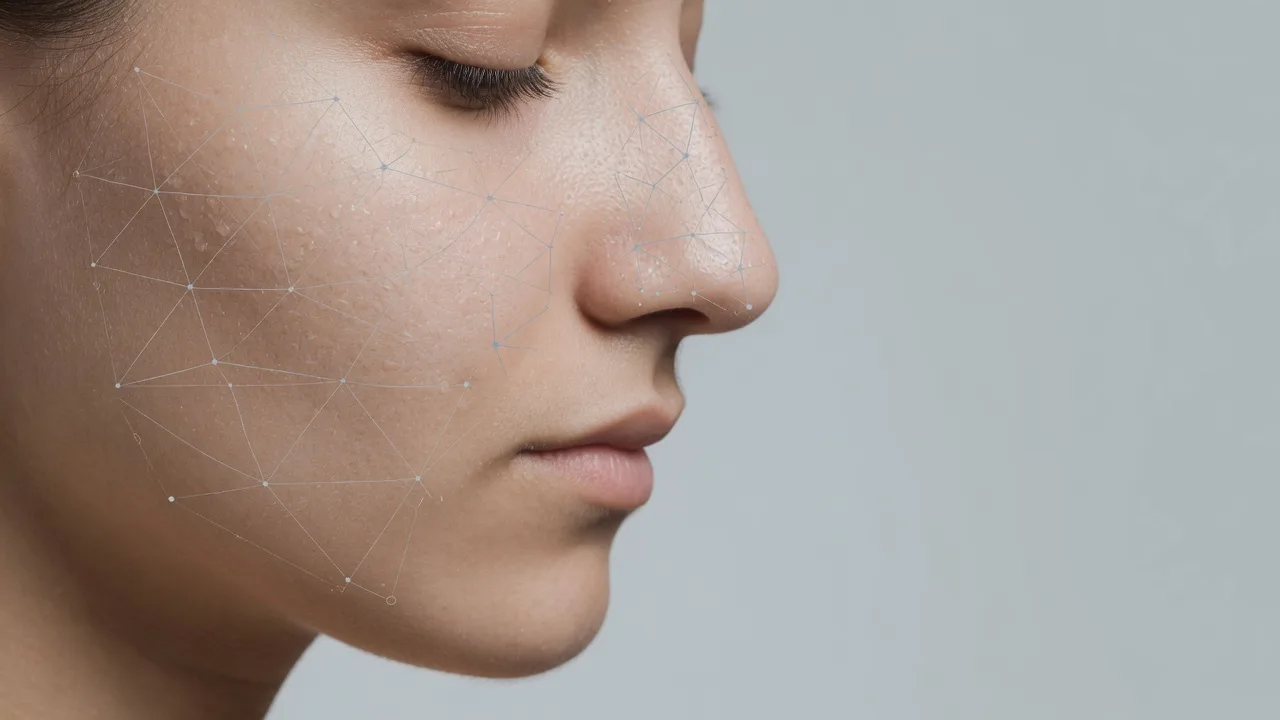
How Accurate Is AI Skin Analysis? Clinical Research Explained
Let's be real. The promise of clinical grade skin analysis from a smartphone is everywhere right now. Every other app in the store claims it can tell you exactly what your skin needs just by taking a selfie. It sounds like magic. Who wouldn't want a professional dermatologist in their pocket at all times?
But there is a big difference between a marketing pitch and actual medicine. When a company uses words like precision or medical grade, it is easy to wonder how much of that is just clever branding. Is the app actually analyzing the texture of the skin? Or is it just guessing based on a few pixels?
To get a real answer, it helps to look past the app store descriptions. The truth lives in the peer reviewed literature of computer vision and dermatology. Research suggests that AI is becoming incredibly good at spotting patterns that the human eye might miss. It can track subtle changes in pigmentation or pore size over time with a level of consistency that a person simply cannot match.
Still, there are hurdles. Lighting changes, different camera lenses, and varying skin tones can all throw a wrench in the works. Dermatologists agree that while AI is a powerful tool for tracking and screening, it is not a replacement for a physical exam. The goal is not to replace the doctor. The goal is to provide a reliable map of the skin so you can make better decisions about your routine.
Understanding where the technology stands requires a look at the actual math behind the image. It is not just about taking a photo. It is about how the software translates a picture into data. That process begins with computer vision.
The Mechanics of Precision: How Computer Vision 'Sees' Skin
First, we need to clear something up. There is a massive difference between a beauty filter on social media and clinical computer vision. A filter is designed to smooth out your skin or change your eye color to make a photo look "perfect." It is basically digital makeup. It does not care about the health of your skin. It just wants to hide the "flaws."
Clinical computer vision is a completely different animal. Instead of hiding things, it is trained to find them. It looks for patterns that the human eye might miss. This is where the AI skin analysis revolution actually happens.
The secret sauce here is something called a Convolutional Neural Network, or CNN. Now, that sounds like a mouthful, but think of it as a digital detective. A CNN does not just look at a photo as one big image. It breaks the image down into tiny pieces. It analyzes edges, colors, and textures. It looks for specific biomarkers like the depth of a wrinkle or the exact shade of a hyperpigmentation spot.
These networks are trained on thousands of images of real skin. Dermatologists agree that this allows the AI to recognize a pattern. For example, it can tell the difference between a temporary blemish and a long term sun spot. It does this by comparing your skin to a massive library of known clinical data.
The process usually follows a few key steps:
- Image normalization to account for different lighting.
- Feature extraction to find specific biomarkers.
- Pattern matching against clinical datasets.
This is how the tech moves from "guessing" to "analyzing." It is not about guessing your skin type. It is about measuring it. This precision is what separates a toy app from a legitimate tool.
Having the technology is only step one. The crucial test is whether these digital detectives agree with the experts. That question leads straight to clinical validation.
Clinical Validation: The Gold Standard of Accuracy
In the world of medicine, you cannot just claim a tool works. You have to prove it. For AI skin analysis, that proof comes from a head to head battle between the algorithm and a board certified dermatologist. This is the gold standard of validation. Researchers take thousands of images and let both the AI and the human experts analyze them. If the AI consistently flags the same concerns as the doctor, it earns its stripes.
This process is not just about getting a general vibe of the skin. It is about hard data. Researchers look at two main metrics: sensitivity and specificity.
Think of sensitivity as the ability to catch the problem. A high sensitivity score means the AI is great at spotting a concern and rarely misses a red flag. This is crucial for early detection. Specificity is the flip side. It is the ability to correctly identify when a condition is not present. High specificity means the AI does not cry wolf. It avoids giving you a scary result when your skin is actually perfectly fine.
When an app has both high sensitivity and specificity, it means the tech is reliable. It can distinguish between a harmless freckle and something that needs a professional look. This bridge between digital logic and human expertise is what makes /blog/understanding-skin-health so much more accessible. You get the speed of a computer with the accuracy of a medical degree.
Most clinical research suggests that AI is becoming incredibly proficient at this. Some tools are even matching the diagnostic accuracy of experienced clinicians in controlled settings. It is a massive leap forward for preventative care. However, accuracy is not a flat line across the board. The AI might be a genius at spotting one thing while struggling with another. This depends entirely on what the AI was trained to see.
That limitation opens a very important distinction: the ability to spot a common breakout is different from the ability to identify a dangerous lesion. This distinction frames the next layer of evaluation.
Condition-Specific Performance: From Melanoma to Acne
When it comes to AI, not all skin concerns are created equal. Some tasks are like a multiple choice test. Others are more like an essay.
Research suggests that AI is incredibly good at the multiple choice stuff. Take melanoma and skin lesions. These often have distinct borders and colors that a trained algorithm can spot with impressive precision. In many cases, AI can flag a suspicious mole as accurately as a seasoned professional. It is a high stakes game, and the technology is proving to be a powerful tool for early detection.
But then we get to the nuances. Grading acne or measuring aging is a different story. Acne is tricky because it changes by the hour. A papule today might be a pustule tomorrow. It is also a deeply personal experience. What one person calls severe acne, another might call a bad week. AI can certainly spot the breakouts, but grading the severity requires a level of context that a photo alone cannot always provide. If you are looking for a plan on how to get rid of acne, you know that the skin is constantly shifting.
The same goes for aging and texture. Fine lines and wrinkles are often a mix of genetics, hydration levels, and how the light hits your face during the selfie. AI can track these patterns over time. However, it struggles to distinguish between a deep wrinkle and a temporary dehydration line. It is the difference between identifying a spot and understanding the story behind it. This is why understanding acne scars and their types usually requires a human eye to feel the skin texture and judge the depth of the scarring.
AI is a fantastic assistant. It is a great first line of defense. But it is still learning the difference between a permanent change and a temporary flare up.
Even with such progress, a persistent hurdle remains: the training data. An algorithm learns from its examples, and if those examples aren't diverse, the results will be skewed. This brings us to a critical conversation about representation.
The Diversity Challenge: Accuracy Across All Skin Tones
Here is the reality of AI. An algorithm is like a student. It only knows what it is taught. If a skin analysis tool is trained primarily on photos of fair skin, it becomes an expert at spotting redness or rosacea on pale complexions. However, it might completely miss a similar condition on deeper skin tones because it has never seen it before. This is what researchers call the diversity gap.
For a long time, the medical world relied heavily on the Fitzpatrick scale to categorize skin. While this is a helpful starting point, it is often too simplistic. Skin of color presents conditions differently. For example, inflammation might look purple or brown rather than bright red. If the AI is not trained on a massive, diverse library of images, it can lead to diagnostic bias. This means the tool is simply less accurate for people with more melanin. That is a problem that the tech community is now working hard to fix.
Clinicians concur that representation in data is not just about fairness. It is about safety. To close this gap, developers are now sourcing global datasets that include every single skin tone and ethnicity. They are teaching AI to recognize how the same skin condition manifests across different levels of pigment. This ensures that someone with a deep complexion gets the same quality of analysis as someone with a fair complexion. For those looking to understand more about these specific needs, a skincare for skin of color guide can provide a great foundation.
The goal is to move toward a world where AI is inclusive by design. Researchers are implementing new checks to ensure the software performs consistently across the board. They are testing the tools against a wider variety of lighting and skin textures to remove the guesswork. This shift is moving the industry away from a one size fits all approach.
But expanding the image library is just the beginning. The next frontier is understanding how these varied profiles actually interact—moving beyond simple labels to complex skin typing.
Beyond Basic Typing: Validating Complex Skin Profiles
Most of us are used to the basic categories. You are either oily, dry, or combination. But skin is rarely that simple. Real skin is a complex puzzle of sensitivity, acne prone tendencies, and hydration levels. This is where systems like the Baumann skin types come into play. Instead of one label, this approach looks at multiple axes to create a specific profile. It is the difference between saying a car is red and providing a full mechanical report on the engine, tires, and transmission.
For a long time, this level of detail was only possible during a face to face appointment. A dermatologist would look at your pores, feel the texture of your skin, and ask about your history. It is a gold standard for a reason. However, researchers are finding that AI can now mirror this process with surprising precision. By analyzing thousands of pixels and detecting subtle patterns in texture and tone, AI can categorize complex profiles that a human eye might overlook in a quick glance.
The aim isn't to replace the doctor, but to arm the professional with a sharper initial assessment. When AI handles the initial classification, it removes the guesswork. Evidence shows that AI can often match the accuracy of physician assessments when it comes to identifying these nuanced skin profiles. It does this by looking at the skin objectively. It does not get tired and it does not have a subjective bias about what "oily" looks like.
If you want to dive deeper into how these categories work, check out this guide on understanding the Baumann skin types. It helps explain why a "combination" label is often too vague for a real skincare routine.
Yet even the most accurate algorithm faces a translation problem. It might excel in a controlled lab, but your bathroom mirror introduces variables that no training dataset can fully replicate. That gap is precisely where real-world accuracy is tested.
The Variable Factor: Why 'Real World' Accuracy Differs from Lab Results
Think about the last time you took a selfie. You probably shifted your position a few times to find the "good" light. Maybe you stepped closer to a window or tilted your head to avoid a shadow. For a human, that is just basic intuition. For an AI algorithm, those tiny shifts are massive variables that can completely change the data.
Lighting is the biggest culprit here. In a clinical lab, researchers use standardized light boxes that ensure every single pixel is illuminated exactly the same way. At home, you are dealing with warm yellow bulbs, cool blue screen glare, or the unpredictable nature of sunlight. If the lighting is too dim, the AI might mistake a shadow for a dark spot. If it is too bright, a glow of light could hide a fine line that would otherwise be visible.
Then there is the hardware. Not all cameras are created equal. A high end smartphone with a professional grade lens captures a level of detail that a budget phone simply cannot match. This introduces the problem of image noise. Noise is that grainy, fuzzy texture you see in low light photos. When an AI tries to analyze a grainy image, it has to guess what is actually a pore and what is just digital interference. This is why understanding the basics of AI skincare 101 is so important. The software is only as good as the image it is fed.
Beyond the gear, the environment plays a role. A smudge on the lens or a slight blur from a shaky hand can throw off the precision of a scan. Dermatologists agree that these real world inconsistencies create a gap between a perfect lab score and a home result. It does not mean the AI is wrong. It just means the AI is reacting to the environment.
That gap, however, doesn't make the technology useless; it changes how we interpret the output. Instead of a final diagnosis, consider the AI’s assessment as a sophisticated starting point. This perspective shifts the conversation from automation to collaboration, paving the way for augmented intelligence.
Augmented Intelligence: AI as a Tool for the Dermatologist
There is a common fear that AI is here to replace the doctor. People imagine a world where a cold algorithm delivers a diagnosis without a single human touch. But that is not how the best medical technology actually works. In the clinical world, the goal is something called the Human-in-the-Loop model. This is where AI acts as a powerful assistant rather than the sole decision maker.
Think of it like a high tech magnifying glass. AI can scan thousands of images in seconds to find tiny patterns that a human eye might miss during a quick office visit. It flags the areas of concern. It highlights the anomalies. Then, it hands those findings over to a dermatologist. The doctor uses their years of training, their intuition, and the physical context of the patient to make the final call.
Studies indicate that this partnership is far more accurate than either the doctor or the AI working alone. When a physician has AI as a second set of eyes, the rate of correct diagnoses goes up. The AI handles the data crunching and the pattern recognition. The human provides the critical thinking and the empathy. This is the essence of augmented intelligence. It does not subtract the human element. It enhances it.
This collaborative approach is already filtering down into the consumer world. Many of the top AI skincare apps for personalized routines are designed to give users a better vocabulary to use when they finally sit down with their provider. Instead of saying "my skin feels weird," a user can bring a data backed report of their skin's evolution over three months. This gives the dermatologist a massive head start.
Shifting the focus from replacement to augmentation gives us the best of both worlds: the speed of a machine and the judgment of a medical professional. That teamwork is already reshaping diagnostics, and it points directly to the next frontier.
The Future of Evidence-Based AI Diagnostics
So, where do we go from here? Right now, we are in the early days of AI skin analysis. Most of the research we see focuses on a single snapshot in time. A computer looks at a photo, compares it to a database, and gives a result. It is impressive, and it works well for a baseline. But skin is not a static image. It is a living, breathing organ that changes based on your sleep, your stress, and the weather.
The next leap in evidence based diagnostics is all about the long game. We are moving toward longitudinal studies. This means instead of one photo, AI will track your skin over months and years. This shift allows the technology to recognize patterns rather than just spotting a single blemish. It turns a diagnostic tool into a personal skin history. Clinical data points to this kind of continuous monitoring becoming the gold standard for preventative care.
This evolution is a huge part of the broader skin longevity 2026 trend. The goal is no longer just to fix a problem after it appears. The goal is to predict it before it happens. Future validation will likely focus on a few key areas:
- Tracking how specific ingredients change skin texture over time.
- Monitoring the early signs of inflammation before they become visible to the human eye.
- Validating AI accuracy across every single skin tone and type to remove bias.
Dermatologists agree that this data will make consultations much more productive. Instead of trying to remember if a spot looked different three months ago, you will have a digital paper trail. The science is moving away from the "magic mirror" approach and toward a genuine medical record. It is about creating a feedback loop where the AI learns from the patient and the doctor learns from the AI.
The promise of evidence-based personalization is no longer distant. Hard data is replacing viral trends. With that in mind, here’s what this means for navigating the tools available today.
The Bottom Line
So, where does that leave us? Is AI ready to take over the dermatologist's office? Not exactly.
Think of AI skin analysis as a high tech bridge. It is a powerful pre clinical tool that helps bridge the gap between wondering what is happening with your skin and actually getting a professional answer. It takes the guesswork out of the equation. Instead of walking into an appointment and trying to describe a flare up that happened three weeks ago, you have a digital trail of data. You have a baseline. You have a way to track progress in real time.
Research suggests that these tools are becoming incredibly accurate at spotting patterns. They can see things the human eye might miss in a mirror. However, skin is an organ. It is complex. It reacts to stress, hormones, diet, and environment in ways that a camera cannot always capture. This is why the gold standard will always be a combination of tech and human expertise.
The goal is integration. Use AI to monitor your skin daily and identify trends. Use it to narrow down which ingredients your skin actually needs. Then, take those insights to a professional. A dermatologist brings medical judgment, years of clinical experience, and a holistic understanding of your health that an algorithm simply does not have.
When you combine AI data with a doctor's expertise, you get the best of both worlds. You get the precision of machine learning and the nuance of human medicine. It turns a standard check up into a data driven conversation.
At the end of the day, AI is here to empower you. It gives you a voice and a set of facts to bring to the table. It is not about replacing the expert. It is about making sure that when you finally sit down in that clinic chair, you have the best possible information to get the results you want.
Drafted using Lumino AI.
This content is for informational purposes only and is not medical advice.
Learn how we review skincare guidance in our methodology.
Last updated: July 2, 2026
Written by
Lumino AI