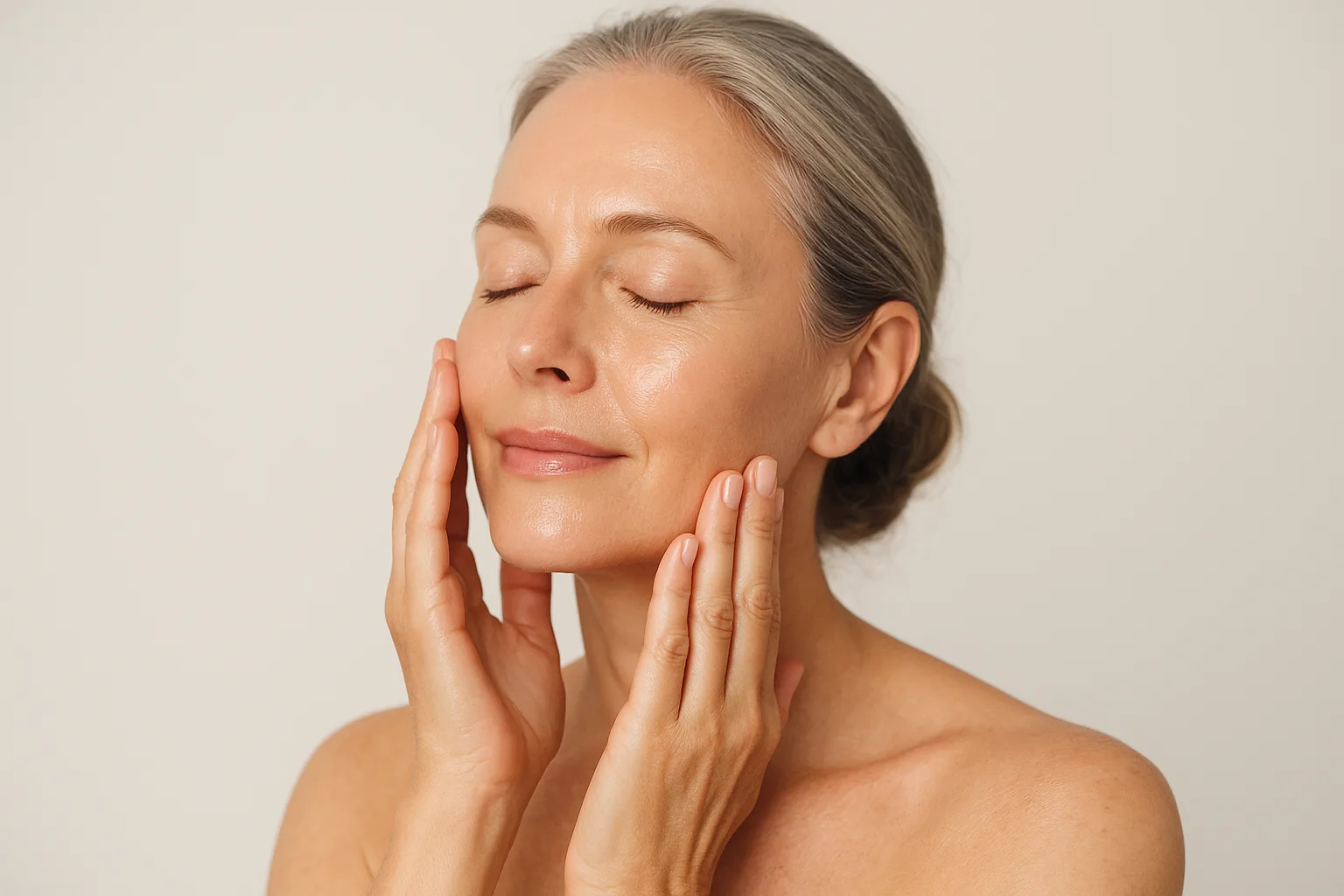
Menopause Skincare Guide
Menopause arrives quietly, upending the skin that once felt predictable and reliable. As estrogen levels plummet, everything shifts. Skin dries out in ways that creams and serums from years past can no longer address. Fine lines deepen into creases. Cheeks and jawline lose their firmness, sagging just enough to catch the mirror off guard. Even the most resilient complexions develop new sensitivities, reacting to products that were once gentle staples.
These changes creep in gradually for some and hit like a wave for others. Hydration evaporates faster than before. What used to be a soft, plump texture turns rough and flaky, regardless of how much moisturizer is layered on. Pores enlarge, rosacea flares, or acne returns in unfamiliar forms. Dermatologists agree these shifts stem directly from hormonal changes. Estrogen once supported the skin's moisture barrier, kept collagen flowing steadily, and maintained elasticity. Without it, the foundation weakens.
Collagen production, the quiet hero behind youthful bounce, slows significantly. Research suggests up to 30 percent vanishes in the first five years of menopause alone. Elastin fibers fray, and the result feels personal and frustrating. A routine that balanced oil production in the 30s or 40s now irritates or falls flat. Cleansers sting. Actives once tolerated cause redness. Skin thirsts for repair on a cellular level, demanding a smarter approach.
This guide breaks down the biology without the jargon overload. It provides clear explanations of how hormones affect your glow, plus practical swaps for your shelf. Gentle actives take center stage, barrier boosters become essentials, and hydrators shift to humectants that pull moisture deep. The goal is to restore resilience, ease discomfort, and reveal skin that feels like you again.
Tools like AI skin analysis from apps such as Lumino Skin help spot these changes early, tailoring advice to your unique shifts. This removes the guesswork and provides targeted steps forward.
What Happens to Skin in Menopause?
Menopause marks a profound shift in the body, driven primarily by declining estrogen levels. This hormone acts like a conductor for skin health. As ovaries produce less of it, skin responds in real time. Collagen production drops, elastin weakens, and the skin's plumpness fades. Research suggests estrogen directly supports these proteins, keeping skin firm and resilient. Without it, fine lines deepen into wrinkles faster than before.
Consider collagen first. It forms the scaffold of skin, accounting for much of its bounce and structure. Dermatologists agree estrogen stimulates fibroblasts, the cells that churn out collagen. In menopause, those fibroblasts slow down. Women can lose up to 30% of collagen in the first five years after menopause begins. Skin thins and sags, causing the smooth jawline of youth to soften.
Elastin follows a similar path. This protein gives skin its snap-back quality. Estrogen decline disrupts its renewal, leading to a loss of elasticity. Creases set in permanently as gravity pulls harder, especially around the cheeks and neck.
Hyaluronic acid also takes a hit. This natural humectant holds 1,000 times its weight in water, plumping skin from within. Estrogen helps regulate its production, and as levels plummet, dryness sets in that no cream can fully mimic. Skin feels tight, itchiness creeps in, and fine lines look etched.
Sebum production shifts dramatically as well. Estrogen once balanced oil output with androgen. Now androgens dominate relatively, which can cause pores to enlarge. Oiliness returns for some, while others battle persistent dryness. Hormonal acne can surprise even in the 50s.
Perimenopause sets this in motion years earlier, often in the 40s. Fluctuating estrogen causes erratic changes where skin alternates between oily breakouts and sudden dryness. Hot flashes exacerbate redness and inflammation. Postmenopause, after 12 months without periods, changes stabilize but accelerate. Research suggests skin ages two to three times faster here, with thickness decreasing by 25% or more. The barrier function weakens, inviting sensitivity. For a deeper dive into skin's foundational layers, explore our understanding skin health guide.
Top Menopause Skin Concerns
Hormonal shifts cause the canvas that once bounced back effortlessly to tell a new story. Extreme dryness tops the list because estrogen once kept the skin's moisture barrier strong. Research suggests the barrier loses up to 30% of its function during perimenopause and early menopause. Lipids dwindle and water escapes, causing cracks to form. This sets off a chain reaction where sensitivity spikes and irritation follows. For deeper insight into how the skin microbiome plays a role in this vulnerability, check out our skin microbiome guide.
A thinning epidermis is another primary concern. The outer layer slims, making skin look crepe-like, especially on hands and cheeks. Dermatologists agree this happens as cell turnover slows. Layers that once renewed quickly now lag. Paired with loss of firmness, it creates sagging. Jowls soften and neck bands deepen as elastin frays and gravity takes hold.
Adult acne often resurges during this time. Hormones fluctuate wildly in perimenopause, and as androgens rise relative to estrogen, pores clog and inflammation brews. Cysts can appear on the chin and jawline, bringing back breakouts that may have vanished decades ago. Hyperpigmentation adds to the frustration. Melasma may bloom across the cheeks and forehead, and sun spots often darken. Hormonal shifts make melanocytes overactive, leading to uneven patches of brown.
Impaired wound healing rounds out these concerns. Cuts linger and scrapes may scar deeper. Estrogen fueled repair previously, but as collagen synthesis drops, healing drags and the risk of infection increases. These changes vary by genetics, lifestyle, and sun history, but the common thread is that estrogen's exit disrupts everything from barrier to bounce.
Best Ingredients for Menopause Skin
Hormonal shifts mean less estrogen, leading to dryness, thinning, and inflammation. Certain ingredients target these exact changes by hydrating deeply, rebuilding strength, and calming the complexion.
Start with humectants. Hyaluronic acid pulls moisture into the skin, plumping fine lines and countering that tight, parched feeling. Research suggests multiple sizes of hyaluronic acid molecules work best, penetrating from the surface to deeper layers for all-day hydration.
Barrier repair is equally vital. Ceramides and cholesterol form the skin's natural shield, which weakens during menopause. These lipids lock in moisture and block irritants. Dermatologists agree they reduce redness and roughness over time. Layer them in a moisturizer for overnight recovery.
Peptides deserve a spotlight for firmness. These amino acid chains signal skin to produce more collagen and elastin, fighting sagging and laxity. Check out our peptides skincare guide for the full breakdown on types like copper peptides and matrixyl.
Retinoids speed up cell turnover to smooth texture, fade pigmentation, and boost collagen without harsh scrubbing. Start slowly to avoid irritation, especially on sensitive menopausal skin. Our retinol retinoids complete guide covers everything from beginners to pros.
Antioxidants tackle inflammation head-on. Vitamin C brightens and firms, while niacinamide soothes and evens tone. They neutralize free radicals that worsen hormonal havoc. Finally, consider phytoestrogens and hormone-mimicking actives. Sourced from plants like soy or red clover, they gently mimic estrogen's effects. Bakuchiol offers retinoid-like benefits without the sting, and genistein supports collagen.
- Humectants: Hyaluronic acid for instant plumpness.
- Barrier builders: Ceramides plus cholesterol to seal and protect.
- Firmness boosters: Peptides to lift and tighten.
- Turnover stars: Retinoids for renewal.
- Calmers: Antioxidants like vitamin C and niacinamide.
- Hormone helpers: Phytoestrogens for subtle support.
Layer these thoughtfully, applying serums first and then creams. Consistency is more important than perfection, as skin responds over weeks rather than overnight.
Building Your Menopause Routine
As barrier function weakens, even familiar products can feel harsh. The key lies in simplicity. Build a routine that prioritizes repair over overload, focusing on gentle steps that layer moisture and protect without overwhelming the skin.
In the morning, begin with a gentle, non-foaming cleanser. A creamy or milky formula rinses away overnight buildup without stripping natural oils. Follow with a hydrating toner or essence to deliver humectants like hyaluronic acid. Next, apply a targeted serum, such as vitamin C, to stabilize uneven tone. Layer on a moisturizer, perhaps sealed with a few drops of facial oil if dryness persists. Finish with broad-spectrum sunscreen, reapplying every two hours if you are outdoors to shield against UV rays that accelerate collagen loss.
Evenings are for unwinding. Double cleanse if wearing makeup or sunscreen, starting with an oil-based remover followed by a gentle water-based cleanser. Tone again for balance, then introduce targeted treatments. Actives like retinoids rebuild collagen but demand caution; start by using them twice weekly and build up as tolerance grows. Alternate nights with peptides or niacinamide to soothe redness. Always follow with layered hydration, using an occlusive like petrolatum to lock everything in overnight.
Frequency matters most with actives. Overuse invites irritation, and research suggests pulsing them prevents flare-ups. Customize your routine by season, using lighter gels in humid summers and richer creams in dry winters. Check our seasonal skincare routine guide for more specific tweaks. Keeping routines to five to seven steps ensures the skin can rebound with patience.
Lifestyle Support for Hormonal Skin
Topical products are only one part of the equation; lifestyle choices form the foundation for resilient skin. Habits that support hormonal balance from within can ease symptoms and promote vitality.
Diet plays a significant role. Foods rich in omega-3 fatty acids, such as wild salmon, chia seeds, and walnuts, calm inflammation and strengthen the lipid barrier. Phytoestrogens, plant compounds that mimic estrogen, offer gentle support. Soy, flaxseeds, and lentils fit seamlessly into meals and may help reduce fine lines by boosting hydration.
Exercise keeps blood flowing, delivering oxygen and nutrients to skin layers. Brisk walks, yoga, or swimming invigorate circulation and fuel collagen production. Aim for 30 minutes most days to achieve a firmer look. Sleep is the ultimate repair tool. During deep rest, growth hormone peaks to mend skin. Since hormonal fluctuations often disrupt sleep, creating a cool, dark environment and winding down with herbal tea can help you achieve the seven to nine hours needed to rebuild the skin barrier.
Stress management is also crucial. Stress spikes cortisol, which breaks down collagen and worsens dryness. Breathing exercises, meditation, or journaling can stabilize moods and skin. These pillars align with skin longevity principles, like those detailed in our longevity trend guide. Nourishing deeply and resting fully ensures your skin thrives for decades.
Repairing the Menopause Skin Barrier
Hormonal shifts thin the stratum corneum, the outermost layer that keeps moisture in and irritants out. This vulnerability demands a gentle reset. Start by stripping back your routine. Ditch harsh actives like acids until the barrier heals. Avoid fragrances and alcohol, switching to fragrance-free cleansers rinsed with lukewarm water.
Ceramides are essential for this repair. These fatty molecules form the "mortar" between skin cells. Since levels plummet during menopause, replenishing them strengthens the barrier. Look for ceramide-rich moisturizers to use daily. Occlusives like petrolatum or dimethicone create a protective film over damp skin, preventing transepidermal water loss. Pair them with humectants like glycerin to draw moisture deep.
For deeper strategies, dive into our dedicated guide at /blog/repair-skin-barrier-2025. It breaks down product picks and layering order tailored to menopausal skin.
Quick tips to accelerate healing:
- Mist with pure thermal water between steps for soothing.
- Sleep on silk pillowcases to minimize friction.
- Humidify dry indoor air.
- Test new products on the inner arm first.
A fortified barrier handles sensitivity better, paving the way for broader care.
Tracking and Professional Care
Tracking changes is a vital strategy once the skin barrier strengthens. Menopause can introduce sudden dryness or hormonal acne that is easier to manage when caught early. While journals are helpful, digital tools can log photos and spot patterns more effectively.
AI skin analysis through Lumino Skin makes this process effortless. By scanning for fine lines, pigmentation shifts, or inflammation, the app helps you monitor markers like adult acne. For the basics on how AI transforms routines, check out our guide at /blog/ai-skincare-101. Regular check-ins allow you to see how supplements or diet tweaks affect your complexion over time.
While technology provides data, professionals handle medical interventions. Consult a dermatologist for personalized prescriptions. Hormone replacement therapy (HRT) often reshapes skin by boosting collagen and taming oiliness. A professional can assess if HRT fits your needs, especially regarding risks like melasma.
Seek professional care when:
- Acne persists despite a gentle routine.
- Severe dryness or itching disrupts sleep.
- New growths or uneven pigmentation appear.
- Over-the-counter options fail after two months of use.
Dermatologists can prescribe topicals like spironolactone for oil control or retinoids tailored to thinner skin. Pairing professional advice with AI tracking ensures you have a full picture of your progress.
The Bottom Line
Menopause reshapes skin through declining hormones and collagen loss, but the path forward is found in simplicity. Embrace routines built for repair and nourishment. Rich moisturizers, ceramides, and gentle peptides encourage firmness without irritation.
Research suggests these targeted choices make a significant difference. Skin during this transition craves stability. Layer on antioxidants like vitamin C to fend off free radicals and follow with hyaluronic acid for a deep quench. Nightly repair can come from bakuchiol or low-dose retinol alternatives.
Consistency anchors the entire process. Daily habits, such as applying broad-spectrum SPF 30 every morning, sustain vitality. Lifestyle factors like sleep, hydration, and stress management amplify topical care. By prioritizing barrier health and choosing fragrance-free formulas, you can navigate these changes with confidence. Menopause marks a refined beginning where skin can glow with renewed purpose.
Drafted using Lumino AI.
This content is for informational purposes only and is not medical advice.
Learn how we review skincare guidance in our methodology.
Last updated: March 7, 2026
Written by
Lumino AI